
LGBTQ+ dating is a significant and well-served niche, and an operator entering it takes on a particular responsibility: this audience's safety needs are real and specific. This guide explains those considerations for an operator, so the platform genuinely protects the members it serves.
Why this needs specific attention
Every dating platform has to take safety seriously, and the protections covered across the trust-and-safety guidance, moderation, verification, location privacy, anti-harassment, apply to every audience. So why does LGBTQ+ dating safety warrant its own guide?
Because the audience faces a set of risks that are sharper, and in some cases categorically different, from those a general dating audience faces, and a platform designed only for the general case can leave those risks unaddressed.
For many LGBTQ+ members, the simple fact of their presence on a dating service is sensitive information that, if exposed to the wrong people, can cause serious harm: to their relationships, their family situation, their employment, and in some circumstances their physical safety. A general dating platform tends to be designed on the assumption that being on it is socially unremarkable. For a large part of the LGBTQ+ audience, that assumption does not hold.
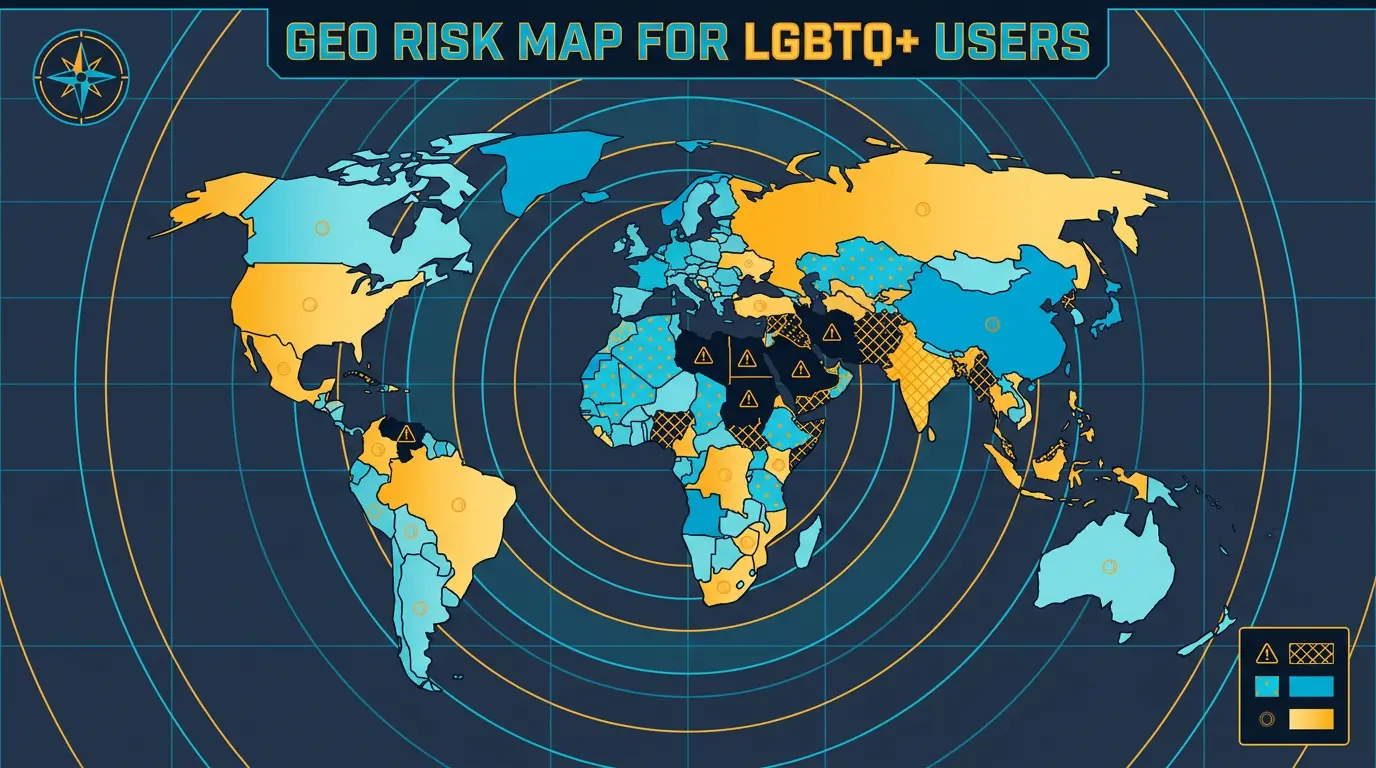
The risks also vary enormously by where a member is. In some places LGBTQ+ people live openly and the main safety concerns resemble those of any dating audience. In other places being LGBTQ+ carries severe social, legal or physical danger, and a dating platform serving members there has to take that into account.
An operator entering LGBTQ+ dating, or serving LGBTQ+ members within a broader service, therefore takes on a specific duty: to understand these heightened risks and to ensure the platform genuinely addresses them. This guide sets out what that means in practice. It is written for the operator, because the operator is choosing and standing behind the platform that this audience will trust.
The heightened risks
It helps to name the heightened risks plainly, because an operator can only confirm a platform addresses them if they know what they are.
The first is non-consensual exposure, often called outing: a member's sexual orientation or gender identity being revealed to people they have not chosen to tell. For many members this is the single most serious risk, and it is one a general platform may not be designed around.
The second is location risk in a heightened form. Location exposure is dangerous for any dating member, but for an LGBTQ+ member in a hostile environment, having their location derived can mean being found by people who wish them serious harm.
The third is targeted harassment and abuse. LGBTQ+ members can be subjected to harassment that is not random but specifically directed at their identity, and in some cases organised, including by people who join the platform specifically to abuse or to target its members.
The fourth is legal and physical danger in certain jurisdictions, where being identified as LGBTQ+ can expose a member to criminal sanction, violence, or both.
The fifth is a heightened version of the impersonation and authenticity problem: fake profiles and bad actors who specifically exploit LGBTQ+ dating environments, including for extortion.
These risks are not reasons to avoid serving the audience; LGBTQ+ dating is a valuable, important niche that deserves to be served well. They are the specification an operator must hold a platform against. The rest of this guide takes them in turn.
Outing and the privacy imperative
The risk of outing makes privacy the single most important consideration in LGBTQ+ dating safety, and it raises the bar above what a general dating platform might consider sufficient.
Outing is the exposure of a member's sexual orientation or gender identity to people they did not choose to tell. The consequences can be severe and wide-ranging, affecting family, community, employment and safety, and they are not within the member's control once the exposure has happened. A platform serving LGBTQ+ members must treat the prevention of outing as a core design responsibility.
In practice this means several things. The platform must protect member information rigorously, so that a member's presence and identity on the service cannot leak. It should give members strong control over their own visibility and over what is shown about them and to whom. It should be thoughtful about discovery, so that a member is not exposed to, or visible to, people they would not want to encounter. It should handle anything that links the member's dating identity to their wider identity with great care.
The platform should also be careful about the edges: notifications, integrations, anything that surfaces the service in a context a member's device or accounts might share. A notification from a dating app that reveals its nature on a member's lock screen is a small thing for a general audience and a potentially serious one here.
For an operator, the privacy imperative is the first thing to confirm about any platform intended to serve LGBTQ+ members. The general standard of privacy is not automatically enough. The question is whether the platform protects members to the standard that the risk of outing genuinely demands.
Location safety
Location safety, important for every dating audience, takes on a heightened seriousness for LGBTQ+ members, and an operator should hold the platform to a correspondingly high standard.
The general rule, set out in the geolocation guidance, is that a dating platform must never expose a member's exact location or coordinates, must resist triangulation, and must give members control over their location. For a general audience the danger of getting this wrong is stalking and harassment. For an LGBTQ+ member in a hostile environment, the danger can be considerably more severe: being located can mean being exposed, attacked, or worse.
This means the location protections are not a feature to take on trust for an LGBTQ+ dating service; they are a protection to scrutinise hard. The platform must genuinely show only approximate distance, must be genuinely resistant to triangulation, and must give members real control, including the ability to be discreet about location, to set it manually, and to limit their location exposure substantially if they need to.
An operator should also think about members who are not in safe environments and design expectations accordingly. A member who needs to use the service without their location being derivable by hostile parties needs the platform to make that genuinely possible.
For an operator, location safety on an LGBTQ+ dating service should be treated as a make-or-break protection. Confirm, specifically, that the platform handles location to the standard this audience's risk demands, and treat any weakness in location handling as disqualifying for this niche.
Operating across different jurisdictions
An operator of an LGBTQ+ dating service has to think carefully about geography, because the situation for LGBTQ+ people varies dramatically around the world, and that variation has real implications.
In many countries LGBTQ+ people are legally protected and able to live openly, and a dating service operates in much the same way it would for any audience, with the heightened privacy and safety care described here but no special legal jeopardy.
In other countries the situation is very different. Being LGBTQ+ can be criminalised, and being identified as LGBTQ+ can expose a person to legal sanction, persecution or violence. There have been documented cases of dating platforms being used by hostile parties, including authorities, to identify and target LGBTQ+ people.
This creates genuine and difficult considerations for an operator. An operator must decide, deliberately and responsibly, which markets the service is offered in and how. Where the service is available to members in places where they face danger, the privacy and location protections are not merely important; they are potentially life-protecting, and the platform's design has to reflect that. An operator should also be conscious of how members in such places can be put at risk by the platform's ordinary behaviours, and of the responsibility that comes with serving them.
This guide cannot give an operator a simple jurisdiction-by-jurisdiction answer; the picture is complex and changes. What it can say is that an operator of an LGBTQ+ dating service must engage with this question seriously rather than ignoring it: understand that the audience's situation varies enormously, make deliberate decisions about markets, and ensure the platform's protections are strong enough for the most at-risk members it chooses to serve. This is a real part of the responsibility of operating in this niche.
Harassment and targeted abuse
LGBTQ+ members can face harassment that is specifically targeted at their identity, and a platform serving them must moderate with that reality in mind.
General harassment moderation, covered in the content moderation and anti-harassment guidance, addresses unwanted contact, abusive messages and the rest. For an LGBTQ+ audience there is an additional layer: harassment directed at members because they are LGBTQ+. This can be individual abuse, and it can be organised, including by people who join an LGBTQ+ dating service specifically to harass its members, to gather information, or to target them.
A platform serious about serving this audience moderates targeted, identity-based abuse seriously. It treats abuse aimed at a member's orientation or identity as the serious harm it is, not as ordinary rudeness. It is alert to the possibility of bad actors infiltrating the service to target members, and it has the verification and detection to make that harder. It enforces firmly against those who do it, and resists their return.
There is also the extortion risk to consider. LGBTQ+ dating environments have been targeted by people who use them to obtain images or information and then attempt extortion, sometimes exploiting a member's fear of being outed. A platform serving this audience must be alert to this pattern, which connects to the image-based abuse and scam-prevention guidance, and treat it with appropriate seriousness.
For an operator, the point is that moderation for an LGBTQ+ dating service has to be more than competent general moderation. It has to understand and actively address the identity-targeted abuse this audience faces. An operator should confirm that a platform's moderation genuinely does so.
Verification and authenticity
Verification and authenticity, valuable on any dating service, carry particular weight on an LGBTQ+ dating service, and an operator should weigh how the platform handles them.
On the one hand, strong verification and authenticity protections help protect LGBTQ+ members. They make it harder for bad actors to create fake profiles to infiltrate the service, to target members, to run extortion or to gather information. A platform where accounts are more accountable is a platform where it is harder to abuse members.
On the other hand, verification has to be designed with sensitivity to this audience's privacy needs. Verification that requires a member to expose more identifying information than they are comfortable with, or that creates records linking their dating identity to their wider identity in ways that could lead to exposure, has to be handled carefully. The goal of verification, keeping bad actors out, must not be achieved in a way that itself increases the outing risk.
A good platform resolves this by verifying in ways that establish authenticity, that a profile is a real, genuine person, without forcing members to surrender or expose sensitive identity information unnecessarily, and by protecting whatever verification data it does hold rigorously.
For an operator, the verification question for an LGBTQ+ dating service is therefore twofold: does the platform verify well enough to keep bad actors out and protect members, and does it do so in a way that respects the privacy and outing concerns of the audience. A platform that achieves both is what the niche needs. An operator should confirm the platform has thought about this balance rather than treating verification as a one-size-fits-all feature.
Inclusive design and the member experience
Beyond the safety protections, an LGBTQ+ dating service should be genuinely designed for the audience it serves, and an operator should care about this both because it is right and because it affects whether the service works.
Inclusive design means the platform genuinely fits the members it is for. The profile fields, the identity and orientation options, the language, the way the service describes people and relationships, should reflect the audience accurately and respectfully, rather than being a general dating platform with a label changed. A member can tell, quickly, whether a service was built with them in mind or merely pointed at them.
This connects to the niche-configurability theme that runs through the software guidance. A platform that can be genuinely configured for the niche, with appropriate identity options, profile fields and language, can serve an LGBTQ+ audience properly. A rigid platform that cannot will produce a service that feels generic and ill-fitting, which members notice and dislike.
Inclusive design also has a safety dimension. A service that genuinely understands its audience tends to understand the safety needs of that audience, and to build the privacy controls, the location care and the moderation sensitivity into the experience. The two go together: a platform built with real understanding of LGBTQ+ members is more likely to be both a better experience and a safer one.
For an operator, inclusive design is part of judging whether a platform can genuinely serve this niche. The audience deserves, and will respond to, a service built with real understanding of who they are, not a generic product with a rainbow on it.
What white label handles for you
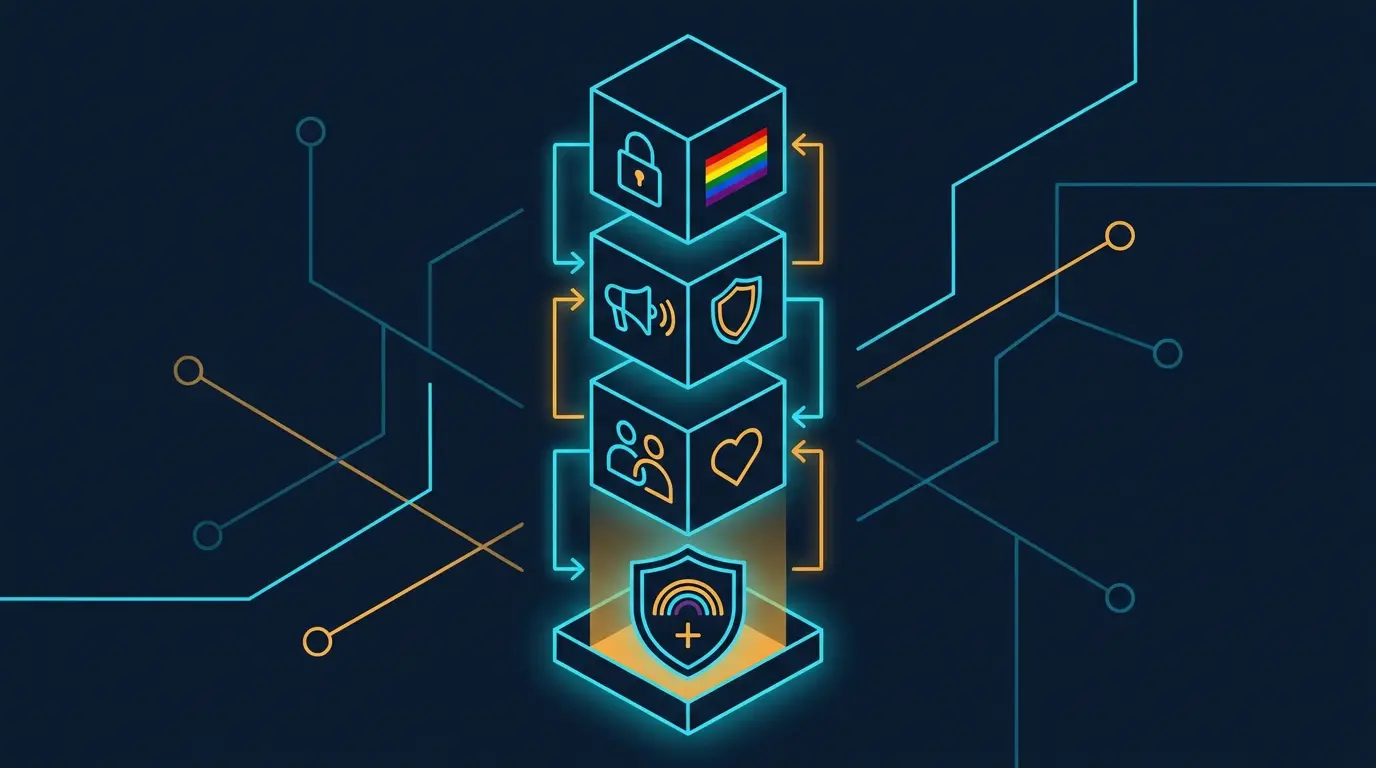
On a platform, the safety protections an LGBTQ+ dating service depends on, privacy, location handling, moderation, verification, are built by the provider, which is a benefit, but one an operator serving this audience must verify with particular care.
The provider builds the privacy protections, the location handling, the moderation systems, the verification, the inclusive-configuration capability. An operator does not engineer any of this. A capable provider has built these to a standard a small independent operator could not match.
But serving an LGBTQ+ audience well raises the bar. The general standard of a competent dating platform is the starting point, not automatically the finish. An operator entering this niche carries a particular responsibility to confirm the platform genuinely meets the audience's heightened needs.
What an operator should confirm: that the platform's privacy protections are strong enough for the outing risk, with real member control over visibility; that location handling meets the heightened standard this audience needs, genuine distance-only, genuine triangulation resistance, genuine member control; that moderation understands and seriously addresses identity-targeted abuse and the infiltration and extortion risks; that verification keeps bad actors out without increasing the outing risk; that the platform can be genuinely, inclusively configured for the audience; and that the operator has thought responsibly about which jurisdictions the service reaches. A good provider will engage seriously with these questions. The provider builds the protections; the operator, for this audience especially, must confirm they are genuinely sufficient.
Common mistakes
The defining mistake is treating an LGBTQ+ dating service as a general dating service with a label, and assuming the general standard of safety is automatically sufficient for an audience with heightened, specific risks.
The second is underrating the outing risk, and not confirming that the platform's privacy protections and member visibility controls are strong enough to prevent non-consensual exposure.
The third is treating location handling as a feature to take on trust, when for at-risk members location exposure can be a matter of physical safety and must be scrutinised hard.
The fourth is ignoring the jurisdiction question, offering the service into places where members face real danger without engaging responsibly with what that means. The fifth is moderation that handles general harassment but does not understand or seriously address identity-targeted abuse, infiltration and extortion. Serving this audience well means meeting its real needs, not the general baseline.
What to read next
For the location detail, read geolocation and proximity matching. For the related harms, see stalking prevention for dating platforms and image-based abuse policy. For niche fit, read how to choose a dating niche. And to assess a platform for an LGBTQ+ niche, DatingPartners.com can walk through it.
DatingPartners offers LGBTQ+ specific safety defaults. Operators ship safer by design.
Visit DatingPartners.com →