
Muslim dating is one of the strongest niches in the industry, but it is also one where copying a mainstream template fails completely. The product has to reflect how courtship actually works for practising Muslims. This playbook explains how to launch and grow a Muslim dating platform with that understanding at its centre.
The opportunity
The Muslim dating market is large and growing, because the global Muslim population is large, young, and increasingly comfortable using digital tools to find a spouse. The key word is spouse. In Islam, marriage is the goal, and what the West calls dating is, for practising Muslims, better understood as a structured, intentional search for a marriage partner.
That intent is what makes the niche commercially powerful. Members are not browsing for entertainment. They are looking for an outcome they treat as one of the most important decisions of their lives, and they will use, and pay for, a tool that genuinely helps them do it in a way consistent with their values.
For a operator, the opportunity is a substantial, marriage-minded, underserved-by-the-mainstream audience. The mainstream dating apps are fundamentally unsuited to this market, which means the competition that matters is other Muslim-specific platforms, and even there, the diversity of the Muslim community leaves room for focused operators.
Understanding the audience
The single most important fact about this niche is that Muslim singles are extraordinarily diverse, and "Muslim dating" is not one audience.
It segments by practice level. A highly practising Muslim approaches courtship very differently from a culturally Muslim but less religiously observant single. The site's design must match a defined practice level.
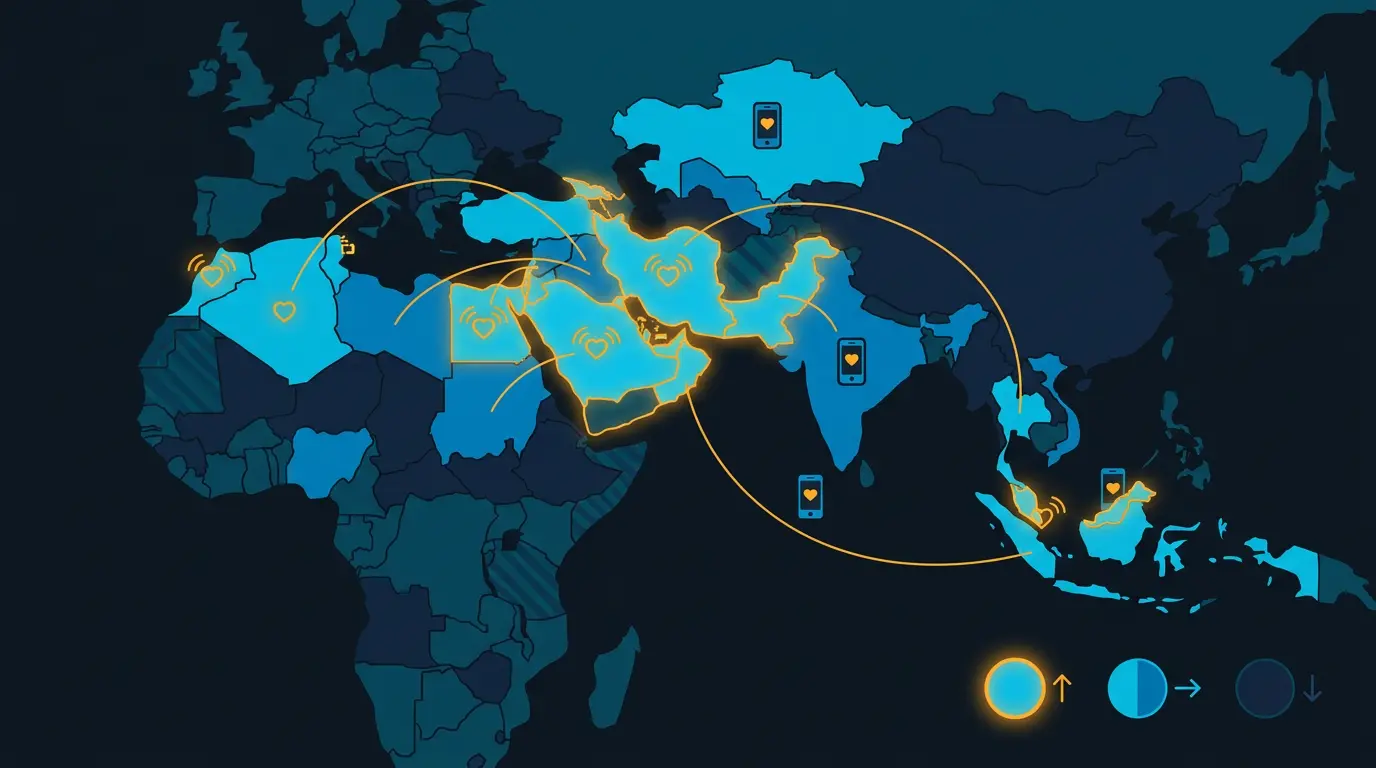
It segments by community and ethnicity. The global Muslim community spans South Asian, Arab, African, Turkish, Southeast Asian, convert and many other communities, each with its own cultural expectations layered on top of shared faith.
It segments by approach to family involvement. For many Muslim women in particular, the involvement of a wali, a guardian, in the process is important, and expectations around family participation vary widely.
It segments by sect, with differences between Sunni and Shia communities that some members will want reflected.
And it segments by geography and life stage. Your decision is which slice of this diversity your platform is genuinely built for. A platform that tries to serve all of it equally will feel generic to everyone.
The competitive landscape
The Muslim dating space has a clear leading platform in Muzz, the large Muslim marriage app, alongside other entrants and the Muslim-marriage sections of broader matrimonial services.
As with any niche that has a strong incumbent, do not plan to beat the leader at being the general Muslim marriage app. That position is taken and defended. The opportunity is in the community-level and practice-level segments the broad leader treats generically: a platform for a specific national or ethnic Muslim community, for a particular practice level, for converts, or for a specific country's Muslim population.
The diversity described above is, commercially, your advantage. A leading generalist serves the South Asian convert and the Arab highly practising single and the secular cultural Muslim with one experience. A focused operator can serve one of those genuinely well.
Positioning your platform
Positioning a Muslim dating platform starts from one non-negotiable: it must be genuinely marriage-focused and halal in design, not a mainstream app with Muslim branding. Members can tell the difference immediately, and the wrong positioning loses the audience instantly.
Within that, decide your specifics. Which community or communities is the platform for? What practice level does it assume? How central is family and guardian involvement to the experience? Be explicit. A platform that clearly states it is built for marriage-minded practising Muslims of a particular community, with modesty and guardian features built in, communicates respect and understanding before a member has created a profile.
Position around seriousness, values alignment and a safe, respectful environment. This audience is not looking for a casual product, and any hint of casual-dating framing is a positioning failure.
Must-have features for this niche
A Muslim dating platform needs features that reflect halal courtship, and these are genuine product requirements, not decorations.
The features that matter most are modesty controls, such as the option to keep photos private or blurred until both sides have shown interest; optional guardian or wali involvement, so a member can include a trusted family member in the process; chaperoned or oversight-friendly communication options; clear marriage-intent framing throughout, with no casual-dating mechanics; and filters for practice level, sect, ethnicity and community so members can find genuine compatibility.
The standard dating features still apply: solid profiles, reliable messaging, good search, and strong safety tools. Verification matters greatly to this audience, which places a high value on authenticity and seriousness.
On a white label platform, configurability is essential. You need a provider whose platform can support modesty settings, guardian involvement and the niche-specific filters. A rigid generic platform cannot deliver a genuinely halal experience, so this is a primary criterion in provider selection.
Choosing your platform
White label is the right route for almost every operator entering Muslim dating, because it removes the build cost and timeline and solves the cold-start problem with a .
For this niche, weight provider selection heavily toward configurability. The halal features above, modesty controls, guardian involvement, marriage-intent framing, are the product. A provider whose platform cannot support them is not a candidate, however good it is otherwise. Ask providers directly and specifically whether and how their platform can deliver these.
Also assess the niche relevance of the shared pool: how many active members in your target community and geography are Muslim and marriage-seeking. And weight verification and trust features highly. A custom build is only justified if you are funded and intend to make halal courtship mechanics a deep technology differentiator. For most operators, a configurable white label platform is the right path.
Monetisation and pricing
Muslim dating monetises well, for the same reason it has strong intent: members are pursuing marriage and treat a working tool as worth paying for.
The standard subscription model fits: a free tier with limited communication, then a paid subscription unlocking full features, in the usual price range with discounts for longer terms. The audience is reasonably price-tolerant when the platform is credible and genuinely halal, because the outcome matters to them.
As always in marriage-minded niches, retention is the real driver. A platform that genuinely helps members toward marriage earns long subscriptions and strong word of mouth within tightly connected communities. Resist aggressive monetisation tactics that undermine the respectful, serious tone, because in this niche tone is part of the product, and a member who feels respected stays and recommends.
Acquisition: reaching Muslim singles
Muslim singles are reached through community and content, and an operator who relies on broad paid advertising will both overspend and underperform.
Content and search are powerful: genuinely useful, culturally informed content about Muslim marriage, courtship and relationships attracts exactly the right audience and builds authority. Community partnerships are the defining channel: mosques, Islamic community organisations, and university Islamic societies for the younger segment are where this audience gathers and where trust is built. Events, including community marriage events, suit a marriage-minded audience well.
Paid social can support acquisition with careful, culturally sensitive targeting, but it is not the foundation. The foundation is community credibility. A Muslim dating platform that respected community figures and organisations are comfortable being associated with has an acquisition advantage no ad budget can buy.
Community and retention
A Muslim dating platform retains members by being a respectful, safe, genuinely values-aligned space, and by demonstrating that it understands its community.
Content with real cultural and religious understanding signals competence. A consistently respectful tone, firm moderation that keeps the platform appropriate, and visible care for members' safety and dignity all build the trust that retention depends on. Marriage success stories, shared with permission, are powerful in a community oriented around exactly that outcome.
Because Muslim communities are interconnected, reputation compounds in both directions. A platform that treats members with respect and handles concerns well becomes recommended within families and communities. A platform that feels careless or disrespectful is quickly warned against. Retention here is, in large part, reputation.

Trust, safety and sensitive data
A Muslim dating platform carries the standard trust and safety obligations of any dating platform, with two areas of particular weight.
First, sensitive data. Religious belief is special category personal data under the UK and EU GDPR, and a Muslim dating platform collects exactly this. The operator must ensure the platform handles religious-belief data lawfully, with proper consent and safeguards, and should confirm the white label provider's compliance framework and data processing agreement cover special category data.
Second, member safety and dignity. This audience expects a platform that protects modesty, prevents harassment, and removes bad actors quickly. Strong moderation, verification, romance-scam prevention, and reporting and blocking tools are both a compliance requirement and a core part of the product promise. Online safety law obligations apply as they do to any dating platform. For this niche, treating trust and safety seriously is also one of the strongest things you can market.
The first-year roadmap
Year one has three phases. Months one to three are setup and soft launch: define the community and practice level, choose a configurable provider, set up the halal features, build initial culturally informed content, and open the platform to a first wave of members through one or two community relationships.
Months four to eight are the build: consistent content and search, deepening community partnerships, steady acquisition, and refining the experience based on member feedback. The base and revenue begin to compound.
Months nine to twelve are traction: a recognisable position within the chosen community, visible retention, and revenue climbing on a clear curve. A focused Muslim dating platform serving a specific community, run with genuine care, can reach a meaningful monthly operator revenue by the end of year one, with strong momentum beyond it, because marriage-minded niches with tight community networks compound powerfully.
Treat year one as earning community trust. The commercial returns follow that trust rather than preceding it.
Common mistakes
The defining mistake is building a mainstream dating app with Muslim branding. A platform that is not genuinely halal and marriage-focused in its design loses this audience immediately.
The second is ignoring the diversity of the Muslim community and trying to serve everyone, which produces a generic experience. Choose a community and practice level.
The third is omitting or treating as optional the features that reflect halal courtship, such as modesty controls and guardian involvement. For much of this audience these are requirements, not extras.
The fourth is launching without community credibility, relying on paid traffic instead of genuine community relationships. The fifth is allowing any casual-dating tone or mechanic to creep in, which signals a fundamental misunderstanding of the audience. Respect the values the platform exists to serve, in design, tone and operation.
What to read next
For the foundations, read how to start a dating site and how to validate a dating site idea. For choosing the niche, see finding your dating niche. For a related playbook, read the arranged marriage and matrimony platform playbook. And to launch on configurable infrastructure, DatingPartners.com can walk through what its platform supports.
DatingPartners supports halal configurations, wali flows and chaperone. Configure quickly.
Visit DatingPartners.com →