
The LGBTQ+ Dating Market
The LGBTQ+ dating market is massive, growing, and fragmented. It's also one of the most profitable dating niches for operators.
There are roughly 40 million LGBTQ+ adults in North America (about 20% of those aged 18-40). Of those, roughly 50% are single or dating. That's 20 million potential users. LGBTQ+ people have higher app adoption rates than straight populations - they're more comfortable with online dating because traditional venues were safer and more accessible. Estimates suggest 60-70% of LGBTQ+ singles use dating apps, compared to 40-50% of straight singles.
The market is split into segments:
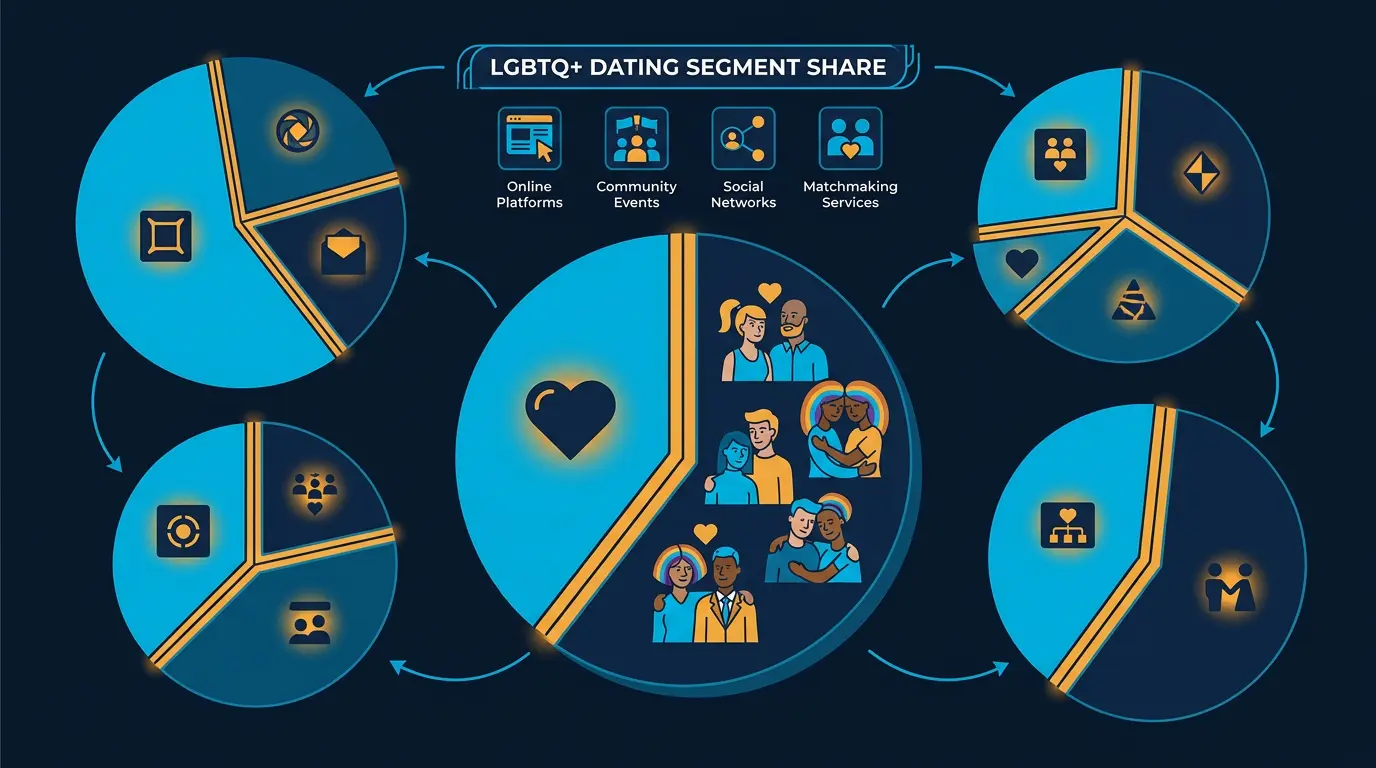
Gay Men: Largest segment by user base. Grindr dominates with 9M+ monthly active users. Scruff, Jack'd, and other apps capture volume. Market estimated at $300-400M annually. Mature, competitive.
Lesbian and Bisexual Women: Second largest segment. HER leads but faces criticism for safety and moderation. Smaller apps like OkCupid and Feeld capture volume. Market estimated at $150-200M annually. High growth (20%+ annually) due to better community building.
Trans and Non-Binary: Growing rapidly but underserved. Very few apps specifically designed for trans dating. Market estimated at $30-50M annually but growing 30%+ per year as awareness increases.
Queer Communities of Color: Marginalized within mainstream LGBTQ+ apps. Face racism and fetishisation. No dominant platforms exist for LGBTQ+ POC. Market estimated at $40-60M annually, growing 25%+ per year.
Bisexual and Pansexual: Often feel unwelcome on gay/lesbian apps and invisible on straight apps. Specific bisexual platforms are rare. Market estimated at $50-80M annually.
LGBTQ+ 50+: Older LGBTQ+ adults are underserved. No major app focuses on 50+ queer dating. Market estimated at $20-30M annually, growing as LGBTQ+ population ages.
Polyamorous and Non-Monogamous: Feeld leads but small market. Estimated at $10-20M annually. Growing as alternative relationship structures become normalized.
Total addressable market for LGBTQ+ dating in North America is $600-800M+ annually, with 15-25% year-over-year growth (faster than mainstream dating because it's less saturated).
Why the fragmentation? LGBTQ+ communities are diverse and have been historically underserved. Gay men's needs are different from lesbian needs. Trans dating is different from cisgender dating. LGBTQ+ people of color face different challenges than white LGBTQ+ people. Rather than one platform serving all, niche platforms serve specific communities better.
The white-label opportunity is exceptional: "Lesbian Dating for the Pacific Northwest," "Trans and Non-Binary Dating," "Gay Dating for Men of Color," or "50+ Queer Dating" can own their niches in ways that national platforms can't.
Distinct Audiences and Personas
LGBTQ+ dating isn't one market. It's multiple communities with distinct needs, safety concerns, and relationship goals.
Gay Men (All Ages): Age 18-70+, seeking hookups, relationships, or in-between. Highly app-savvy. Many use multiple apps simultaneously. Willing to pay for premium features (Grindr's growth is partly paid features). Income: varies. Large market but very competitive.
Lesbian Women (All Ages): Age 18-70+, seeking relationships, friendships, and community. Often prefer slower, more intentional matching. Value community and safety highly. Burnout on mainstream apps is high due to fake profiles and predatory behavior. Income: varies. Growing market with high retention if platform does community well.
Bisexual and Pansexual People: Age 18-70+, seeking partners of any gender. Often feel invisible on gay/lesbian apps and unwelcome on straight apps. Want platform that honors their orientation, doesn't fetishise them. Income: varies.
Trans Women: Age 18-70+, seeking relationships with other trans people or cis people (who affirm them). Often face fetishisation and rejection. Safety is paramount. Many don't want visibility to people in their daily life. Income: varies. Smaller market but high loyalty if platform is genuinely supportive.
Trans Men: Age 18-70+, similar needs to trans women. Often feel invisible even within queer communities. Some want trans-specific spaces, others want to date cis men as stealth. Income: varies. Very underserved market.
Non-Binary People: Age 18-70+, seeking partners of any gender. Value platforms that go beyond binary gender and sexuality. Want spaces that recognize fluidity. Income: varies. Growing demographic, very underserved.
LGBTQ+ People of Color: Age 18-70+, all orientations and identities. Face racism and fetishisation on mainstream apps. Want spaces centered on their experience. Often build community around shared racial and cultural identity alongside sexual identity. Income: varies. Growing, high loyalty to platforms that center them.
LGBTQ+ 50+: Age 50-80+, seeking relationships and companionship. Feel invisible on apps built for 25-year-olds. Often tech-savvy but value accessibility. Want community with people in life stage. Income: varies. Small but growing market, very underserved.
Polyamorous and Non-Monogamous LGBTQ+: Age 18-70+, seeking multiple relationships, ethical non-monogamy. Want platforms that don't judge alternative structures. Income: varies. Small but engaged market.
| LGBTQ+ Segment | Est. Users | Market Size | Growth Rate | Primary Platforms |
|---|---|---|---|---|
| Gay Men | 8-10M | $300-400M | 8% | Grindr, Scruff, Jack'd |
| Lesbian & Bi Women | 6-8M | $150-200M | 20% | HER, OkCupid |
| Trans & Non-Binary | 1.5-2M | $30-50M | 30% | Very few dedicated platforms |
| LGBTQ+ People of Color | 4-6M | $40-60M | 25% | No dominant platform |
| Polyamorous LGBTQ+ | 500K-1M | $10-20M | 15% | Feeld |
| LGBTQ+ 50+ | 2-3M | $20-30M | 25% | Minimal options |
Who's Already Playing
Grindr: Dominates gay men space with 9M+ MAU. Owned by Chinese company Kunlun (sold then repurchased). Good features but safety concerns (racism on platform, data privacy issues). High churn (men cycle through apps). Very competitive. New features and safety improvements are helping retention.
HER: Leads lesbian and bisexual women space. Designed by women for women. Strong community focus. But facing criticism for safety moderation and authenticity verification. Growing but burnout is real. Good opportunity for competitor focused on safety and community.
Scruff: Strong gay men's app (5M+ users). Owned by Perry Street Software. More body-positive than Grindr, better moderation. Loyal user base.
Feeld: Leads polyamorous and non-traditional relationships. Strong community focus. Smaller user base (estimated 2-3M), but highly engaged. Good platform but not mainstream.
OkCupid, Tinder, Bumble: All have significant LGBTQ+ users but aren't optimised for queer needs. Many LGBTQ+ people use them as secondary app.
Blued (international): Very popular in Asia, growing in North America. Focus on gay men. Different model (live streaming, social features).
The gaps are huge:
- No major trans and non-binary dating platform
- No major LGBTQ+ people of color platform
- No major lesbian dating platform post-HER burnout
- No major 50+ queer dating platform
- No bisexual-specific platform
- No major ethical non-monogamy platform
Must-Have Features for Inclusion
LGBTQ+ dating requires features that mainstream apps lack. Inclusion isn't about adding a pronoun field. It's about fundamental platform design.
Gender and Sexuality Options That Go Far Beyond Male/Female: This is non-negotiable. You need:
- Multiple gender identity options (at least: Man, Woman, Non-binary, Two-Spirit, other/open, and custom text)
- Multiple sexuality options (gay, lesbian, bisexual, pansexual, asexual, questioning, queer, other/open, and custom text)
- Separate "I am" and "I'm seeking" options (someone can be a man seeking men, or a man seeking women, or a man seeking non-binary people)
- Option for users to share their pronouns
- Option for open-text gender/sexuality instead of checkboxes (some people's identity doesn't fit predefined categories)
Safety Features Against Discrimination: This is also non-negotiable:
- Block by location (let trans people hide their general location for safety)
- Private profile mode (users can be invisible to public, discoverable only by people they follow)
- Reporting and quick bans for racist, transphobic, transmisogynistic, or discriminatory content
- AI detection of slurs and discriminatory language
- Verification and badges for anti-discrimination commitment
- Clear community guidelines that explicitly prohibit racism, transphobia, misogyny, and fetishisation
Verification and Authenticity: LGBTQ+ apps attract many fake profiles (both romance scammers and people looking to expose/harass). Photo verification is essential. Consider secondary verification for trans people (birth name verification is unnecessary, but you could verify other ways).
Asynchronous Messaging: Many LGBTQ+ people want to take time before meeting. Messaging should allow thinking, not pressure real-time chat. No "matches expire" mechanics that pressure decision-making.
Trans-Specific Features:
- Option to disclose trans status privately to matches only, not on public profile
- Option for trans people to see other trans people (not forced outing)
- Flag profiles that explicitly seek trans people in potentially fetishising ways, allow trans users to avoid those profiles
- Support trans people in pre-transition (some want to connect before transition)
Discreet Mode: For people not out or in unsupportive environments:
- Hide app from home screen
- Use innocuous app name/icon
- Anonymous browsing option
- Don't auto-sync to social media
- Option to set fake name (if matching, verify legal name separately)
Community Features: Groups, discussion spaces, event boards:
- Affinity groups for underrepresented communities (LGBTQ+ POC, trans community, 50+ community, etc.)
- Event coordination (local meetups, Pride events, etc.)
- Discussion spaces around LGBTQ+ experiences
- Connection-focused, not just dating-focused
Inclusive Search: Let users search by:
- Gender identity(ies) they're seeking
- Sexuality(ies) they're interested in
- Pronouns
- Trans status (if disclosed, with user control over visibility)
- Poly status (mono, poly, hierarchical, etc.)
- Level of transition (for trans people: pre-transition, in-transition, post-transition)
Better Photo Options: Many LGBTQ+ people want more control over photo presentation:
- Gallery instead of single profile photo
- Private photo gallery (visible only to matches)
- Photo captions explaining context
- Ability to change which photo is primary in different situations
No Swiping: LGBTQ+ users often find Tinder-style swiping dehumanizing. Prefer browsing or match-and-wait models. Messaging-first interfaces work better.
Building Your Platform
Three paths: build, white-label, or acquire.
!LGBTQ+ dating market segmentation showing size, growth rates, and platform opportunities by community *LGBTQ+ dating market segmentation showing size, growth rates, and platform opportunities by community*
Build from Scratch: Expensive ($600K+), slow (12-18 months), and you'll make mistakes if you don't understand LGBTQ+ needs. Only recommended if you're LGBTQ+ yourself or have deep product expertise and serious funding.
White-Label Platform: Recommended path. DatingFactory, AffinityMedia, and others provide white-label solutions. Customize heavily for inclusion:
- Add comprehensive gender/sexuality/identity fields
- Integrate reporting and moderation tools
- Customize UI (avoid heteronormative language)
- Build community features
- Add safety tools
Cost: $5K-$20K monthly. Timeline: 3-4 months to launch. Key advantage: you launch quickly and focus on community building and moderation.
Acquire and Reposition: If you find a struggling LGBTQ+ app, acquiring it ($30K-$150K) gives you existing users and SEO history. Risks: outdated code, poor moderation practices, cultural baggage.
For most founders, white-label is fastest and smartest.
Monetising LGBTQ+ Dating
LGBTQ+ users are willing to pay for platforms that work and feel safe.
Subscription Model (Primary): Monthly at $19.99-$29.99 or annual at $149-$199. LGBTQ+ users have slightly different behavior than mainstream users - they're willing to pay for quality but sensitive to feeling exploited. Don't charge too much or you'll face backlash. Retention: 50-60% annually.
Premium features:
- Unlimited messaging
- Advanced filtering (gender, sexuality, identity options)
- See who liked/viewed you
- Priority profile visibility
- Discreet mode access
- Community group creation
- Ad-free browsing
À La Carte Purchases: Be careful with this - LGBTQ+ communities are sensitive to manipulation. But offer:
- "Boost my profile this week" at $4.99
- "See all who viewed me" at $2.99
- "Create a group" for free (running costs are low)
Group Memberships and Affiliate Partnerships: Partner with LGBTQ+ organizations, Pride festivals, LGBTQ+ fitness centers, bars, and nightlife. Cross-promote. Offer group memberships at discount. 5-10% revenue share.
Free + Premium Model: Many LGBTQ+ people are young and less affluent. Free-to-start model with clear path to premium works. Freemium: 8-12% conversion to paid.
Sponsorships and Partnerships: LGBTQ+ brands (LGBTQ+-friendly tech, travel, health) want access to LGBTQ+ users. Sponsorship opportunities, affiliate revenue, or partnership displays. 10-20% of revenue possible.
Event Ticketing: If you run in-person meetups or Pride-related events, partner with event platforms to sell tickets. 5-10% commission or flat fee.
Pricing insight: LGBTQ+ communities are highly sensitive to feeling exploited. Price fairly, be transparent, and invest visibly in safety and community. Users will reward you with loyalty.
Reaching LGBTQ+ Communities
LGBTQ+ people live online but in specific spaces. Mainstream channels don't work well.
LGBTQ+ Media Partnerships: Advertise in LGBTQ+ media (Logo, Advocate, them., Out Magazine, LGBTQ+ podcast networks, YouTube channels). Cost: moderate to high, but audience is targeted and engaged.
Social Media with Authenticity:
- Instagram: LGBTQ+ community is strong here. Partner with LGBTQ+ influencers, run Instagram ads, build following.
- TikTok: Younger LGBTQ+ people are here. Partner with LGBTQ+ TikTokers.
- Facebook: Still valuable for older LGBTQ+ demographics and community groups.
- Twitter/X: LGBTQ+ communities are active in discourse, advocacy. Presence matters.
LGBTQ+ Community Partnerships:
- Contact local LGBTQ+ centers, Pride organizers, LGBTQ+ sports leagues, etc.
- Set up booths at Pride events (this is huge for visibility and sign-ups).
- Sponsor local LGBTQ+ organizations.
- Partner with LGBTQ+ resource centers at universities.
Pride Event Presence: Pride season (May-June in most places) is your peak marketing opportunity. Booth presence at major Pride festivals gets you hundreds of sign-ups. Cost: $2K-$10K per booth, ROI is excellent.
Influencer Marketing: Partner with LGBTQ+ influencers on TikTok, Instagram, YouTube. They have loyal audiences. Cost: $500-$2K per partnership. Very effective for reaching younger LGBTQ+ users.
Google Search: Rank for "gay dating sites," "lesbian dating apps," "trans dating," "LGBTQ+ dating," etc. High-intent search traffic. Organic and SEM.
Community Engagement: Join LGBTQ+ Reddit communities (r/gay, r/lesbian, r/trans, r/NonBinary, etc.), LGBTQ+ Discord servers, Facebook groups. Engage authentically, answer questions, share your platform where relevant. This builds reputation and word-of-mouth.
Blog and Content: Write thoughtful content about LGBTQ+ dating, safety, community, identity. "Trans Dating 101," "How to Heal from Dating Trauma," "Poly LGBTQ+ Relationships." This brings organic traffic and builds authority.
Email: Collect emails from prospects. Send valuable content (safety tips, community spotlights, feature announcements). Email conversion is 5-10%, much higher than ads.
Referral Program: Offer $5-10 credit per referred friend who converts. LGBTQ+ communities are built on friendship and recommendations. Word-of-mouth is your strongest channel.
Budget allocation (Year 1):
- Pride and community events: 30%
- LGBTQ+ media and influencer partnerships: 25%
- Social media (Instagram, TikTok): 20%
- Google SEM + organic: 15%
- Community engagement and email: 10%
Expected CAC: $2-5 per member. LGBTQ+ communities are tight and word-of-mouth is powerful.
Creating Safe Community
Safety and inclusion are existential for LGBTQ+ dating platforms. Get it wrong and you'll lose community trust fast.
Active Moderation Against Discrimination: Review reported content within 24 hours. Ban users for racism, transphobia, misogyny, fetishisation. Show moderation logs ("This month we banned 45 users for discriminatory behavior"). Transparency builds trust.
Success Stories and Visibility: Feature couples who met on your platform, especially trans couples, couples of color, and non-heteronormative couples. Write detailed stories. Celebrate different relationship structures (poly couples, non-monogamous relationships, etc.).
Community Leaders and Badges: Identify and empower community members who contribute (moderators, group leaders, advocates). Give them badges, recognition. Let them shape community norms.
Regular Community Events: Host virtual or in-person events for users. Workshops on dating safety, trans health, dealing with racism, building healthy relationships. Partner with LGBTQ+ experts and educators.
Affinity Spaces: Create closed groups for underrepresented communities (trans people, LGBTQ+ POC, older LGBTQ+ people, disabled LGBTQ+ people). These spaces let people find community and discuss niche challenges.
User Education: Create guides on LGBTQ+ dating, coming out, trans dating, navigating racism in gay spaces, finding affirming healthcare. Content builds community and helps retention.
Celebrate LGBTQ+ Holidays and Events: Special events around Pride, Transgender Day of Visibility, International Lesbian Day, etc. Show that you value and celebrate LGBTQ+ culture.
Safety Resources: Provide hotlines, resource links, information about LGBTQ+ community organizations. Position yourself as a trusted community hub, not just a marketplace.
Safety, Legal, and Moderation
LGBTQ+ dating has specific safety considerations.
!LGBTQ+ dating marketing effectiveness by channel showing Pride events, social media, and community partnerships *LGBTQ+ dating marketing effectiveness by channel showing Pride events, social media, and community partnerships*
Photo Verification: Verify that profile photos match selfies. This blocks catfishers and protects especially trans users who face harassment.
Reporting and Response SLA: Commit to reviewing reported content within 24 hours and responding to user safety concerns within 48 hours. Transparency is trust.
Anti-Discrimination Policy: Clear policy against racism, transphobia, transmisogyny, homophobia, biphobia, ableism, and fetishisation. Define what you won't tolerate. Enforce consistently.
Terms of Service: Clear, readable, and aligned with LGBTQ+ values. No tolerance for harassment. Protect user data. Be transparent about features and limitations.
Privacy and Data Protection: LGBTQ+ people are often cautious about data due to historical persecution. Make clear:
- How data is used
- Who has access
- How long it's retained
- No data sharing with third parties
- GDPR/CCPA compliance
Age Verification: Verify that all users are adults (18+). Some users may be under 18 and exploring sexuality - you can't serve them.
Insurance: Liability insurance for online dating platform. Cost: $5K-$15K annually.
Consult with LGBTQ+ Experts: For significant features or policies, consult with trans people, people of color, disabled LGBTQ+ people, etc. Get feedback before launch. This prevents missteps.
Emergency Resources: Have hotlines and resources for users in crisis. Partner with LGBTQ+ health and mental health organizations.
Financial Realities
LGBTQ+ dating economics (for niche-focused site, e.g., "Trans Dating" or "Lesbian Dating for the West Coast"):
Year 1:
- Marketing spend: $160K (Pride events, community building is expensive)
- Platform + ops: $90K
- Team (you + community manager + moderator): $70K
- Misc: $40K
- Total cost: $360K
- Target sign-ups: 3,500
- Premium conversion: 10%
- Paying members at year-end: 350
- : $140/year
- Annual revenue: $49K
- Year 1 loss: $311K
Year 2:
- Customers from Y1 + retention (55%) + new from marketing/referral: 1,300 paying
- Revenue: $182K
- Costs decline: $330K
- Year 2 loss: $148K
Year 3:
- Paying members: 2,400
- Revenue: $336K
- Costs: $310K (ops scaling)
- Year 3 profit: $26K
Year 4-5:
- Word-of-mouth and Pride season compound
- Paying members: 4,000+
- Revenue: $560K+
- Profit: $200K+
Key variables:
- Conversion rates vary by niche (trans dating: 12%, lesbian dating: 9%, gay men: 8%)
- Retention higher than mainstream (safety + community = stickiness)
- ARPU varies by niche (older users pay more, younger users less)
- CAC lower than mainstream due to community focus
Profitability timeline: 24-36 months if you build community trust effectively.
Critical success factor: active moderation and community management. Without this, you'll hemorrhage users to discrimination and poor safety. This is your biggest cost (staff), but also your biggest differentiator.
Key Takeaways
- LGBTQ+ dating market is 20M users in North America with 600-800M+ annual spending, growing 15-25% per year.
- Grindr and HER lead their segments nationally, but huge gaps exist: trans dating, LGBTQ+ POC, lesbian-specific, older queer people, non-monogamous communities.
- Essential differentiators: comprehensive gender/sexuality options (go far beyond male/female), strong anti-discrimination features, safety tools, community features, and discreet mode.
- White-label platform with heavy customisation is fastest path (3-4 months, $5K-$20K monthly).
- Monetise via subscription ($19.99-$29.99/month). LGBTQ+ users are willing to pay for platforms that feel safe and inclusive.
- Market through Pride events (biggest ROI), LGBTQ+ media, social media, influencer partnerships, and community engagement. CAC is lower than mainstream due to tight communities and word-of-mouth.
- Active moderation against discrimination is non-negotiable. Invest heavily in community management and safety. This is your biggest cost and biggest differentiator.
- Profitability takes 24-36 months. Own one niche deeply. Breadth loses to depth.
- LGBTQ+ community will abandon platforms that feel exploitative, unsafe, or inauthentic. Trust is everything.
DatingPartners supports LGBTQ+ inclusive builds with robust safety defaults. Start here.
Visit DatingPartners.com →