
Business Registration Requirements by Jurisdiction
Before you launch, you need a legal business entity. The structure varies dramatically by location.
United Kingdom
If you're operating a dating site targeting UK members or generating UK revenue, you must:
- Register as a UK company (Ltd company) with Companies House or operate as a sole trader
- Register for VAT if turnover exceeds 85,000 GBP annually (as of 2026)
- Obtain an Employer Identification Number (EIN) if you have employees, or register for self-assessment if self-employed
- Register with the Information Commissioner's Office (ICO) as a data controller - this is mandatory for any site processing personal data
A UK Ltd company costs approximately 12-99 GBP to register, but you'll need an accountant or use services like Xero for ongoing compliance (400-1,200 GBP annually).
The Online Safety Act (2024, enforced 2025) also requires that platforms maintain written risk assessment documents and designate a senior manager responsible for compliance. This doesn't require additional registration, but it's a mandatory administrative requirement.
United States
US requirements depend heavily on which states you target and how you operate.
- If you're a US citizen or resident: register an LLC in a business-friendly state (Delaware, Wyoming, or your home state) - costs typically 75-200 USD
- Obtain an EIN (Employer Identification Number) from the IRS - free, takes minutes online
- Register for state tax compliance in any state where you have significant revenue or members
- Check if your niche state has specific dating site regulations (some states have restrictions on certain niches like sugar dating)
If you're outside the US but targeting US members:
- You likely don't need a US business registration unless your revenue is substantial (50K+ USD annually)
- However, you must comply with FTC rules and consumer protection laws even as a foreign operator
- You should establish terms that clarify your jurisdiction and dispute resolution process
State-level requirements vary. California, Florida, and New York have specific consumer protection rules that apply to dating services even if you're not registered there.
European Union
EU requirements are jurisdiction-specific but share common threads:
- Register a business entity in the member state where you operate your main office
- Germany: Register with Handelsregister (Trade Register) - costs approximately 100-300 EUR
- France: Register with INPI (Institut National de la Propriete Industrielle) - approximately 200-400 EUR
- Spain: Register with Mercantil Registry - approximately 200-400 EUR
- Netherlands: Register with KvK (Chamber of Commerce) - approximately 50 EUR for first year
The EU also requires compliance with the Digital Services Act (DSA), which has tiered requirements based on your user base:
- Services with 10,000+ active users must comply with additional DSA obligations including detailed terms of service, transparent recommender systems, and user complaint mechanisms
- Services with 45,000,000+ EU users face even stricter requirements (deemed "very large online platforms")
For most small dating sites, you'll hit DSA compliance obligations once you exceed 10,000 users.
Canada, Australia, and Other Jurisdictions
- Canada: Register a business in your province, comply with PIPEDA (federal privacy law), and provincial consumer protection laws
- Australia: Register your business with ASIC, comply with the Privacy Act and Australian Consumer Law
- Other regions: Check local requirements - most require some form of business registration and have specific data protection laws
Data Protection and Privacy Laws
Data protection is the biggest ongoing legal obligation for dating sites, especially the personal information you collect.
GDPR (UK and EU)
Under GDPR, dating sites face strict requirements because dating profiles contain sensitive personal data:
- Age (a special category under GDPR Article 9 if you're processing children's data)
- Location information
- Sexual preferences or orientation
- Health information (if disclosed in profiles)
- Photos and biometrics
These are considered "special category" data under GDPR, requiring explicit consent and additional safeguards.
Key GDPR requirements:
- Explicit, informed consent for every data collection purpose. "By using our site, you agree" is no longer sufficient - you need affirmative checkbox consent
- Detailed privacy policy explaining what you collect, why, for how long, and who has access
- Data Subject Access Requests: users can request all data you hold about them within 30 days
- Right to Erasure: users can demand deletion of their data (though you can retain for legal/fraud prevention)
- Notification of data breaches within 72 hours to authorities and users
- Data Protection Impact Assessment (DPIA) for any processing that carries risk
- Data Processing Agreements with third parties (your platform, payment processor, analytics tools)
- A Data Protection Officer (DPO) if you're a public authority, or if your core business involves systematic processing of sensitive data
Failure to comply carries fines up to 20,000,000 EUR or 4% of global annual revenue, whichever is higher.
For practical purposes:
- Use a privacy policy template from a reputable source (Termly, iubenda, or Prolific Legal)
- Customise it specifically for dating data
- Implement consent management for cookies and tracking
- Document all your data processing activities
- Set data retention policies and automate deletion after profile closure
- Use Data Processing Agreements with all third-party tools
California Consumer Privacy Act (CCPA)
If you have California residents or 100,000+ USD annual revenue from personal data, CCPA applies:
- Users have the right to know what data you collect
- Users have the right to delete their data
- Users have the right to opt-out of data sales
- Users have the right to non-discrimination for exercising privacy rights
- Penalties: up to 7,500 USD per violation or real damages, whichever is greater
CCPA is less strict than GDPR but still significant. Many sites use the same privacy framework to comply with both.
Other US State Laws
Several states have passed their own privacy laws (Virginia VCDPA, Colorado CPA, Connecticut CTDPA, Utah UCPA) with similar requirements. If you operate nationally, implement CCPA-compliant practices - they generally meet most state requirements.
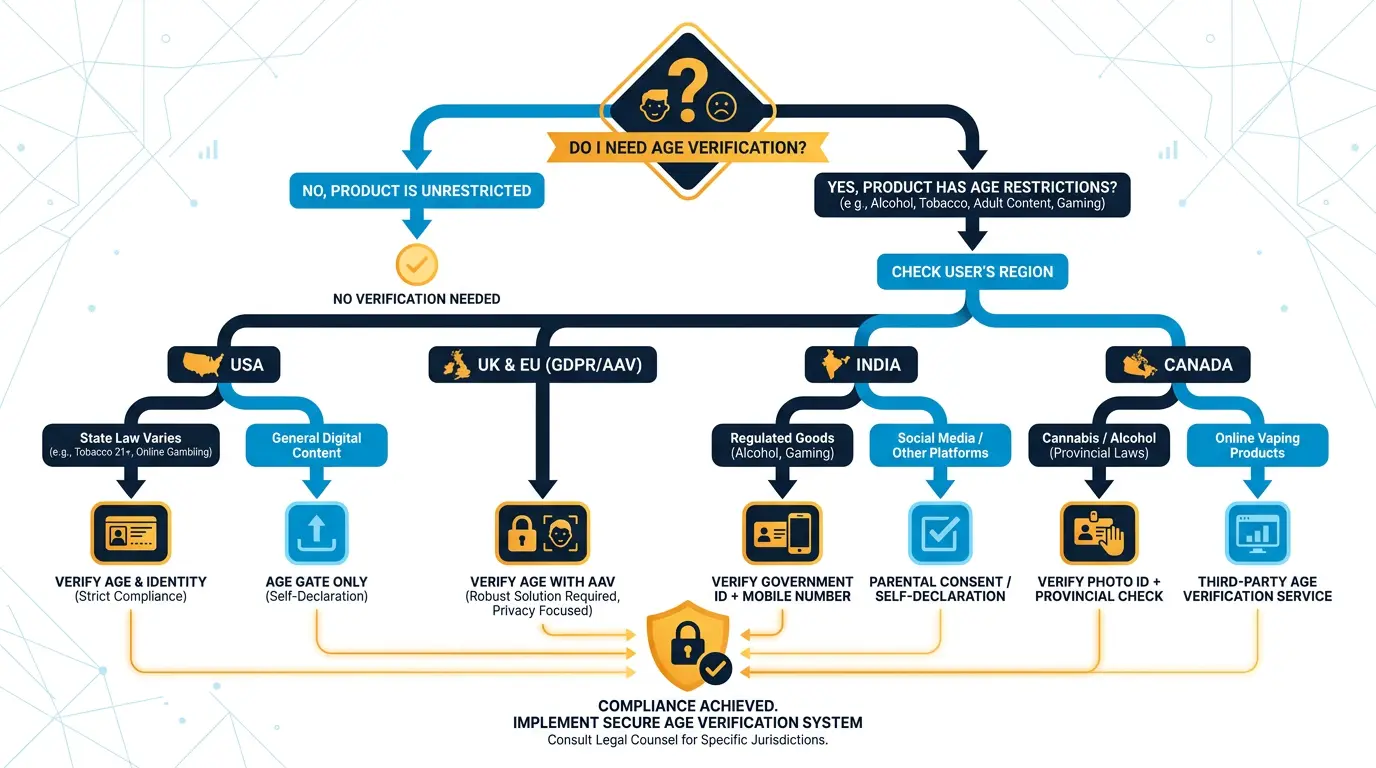
Age Verification Mandates
Age verification is increasingly mandatory, not optional.
UK: Online Safety Act
Starting in 2025, the Online Safety Act mandates age verification for any platform allowing user-to-user interaction that could expose minors to harm. Dating sites fall squarely in this category.
Requirements:
- You must use age-assurance technology before minors can access adult-oriented content
- Age verification methods must be reliable. Current accepted methods:
- Credit/debit card verification (checks against credit databases)
- Government ID verification (passport, driving licence)
- Third-party age verification services (Age Gateway, Veriff, Intellicheck)
- You must keep verification records but separate from user data
- Non-compliance carries fines up to 20,000,000 GBP or 10% of UK turnover
Most dating platforms use Age Gateway (costs 0.10-0.50 GBP per verification) or credit card-based age checks (integrated with payment processors).
US: State-Level Variations
- New York: SAFE Act (proposed, near-final) will require age verification for adult-oriented platforms
- Several states have proposed age verification requirements, but none are federally mandated yet
- However, NCMEC (National Center for Missing and Exploited Children) guidelines recommend age verification as best practice
EU: Digital Services Act
The DSA requires platforms to address child safety. Age verification isn't explicitly mandated, but you must:
- Take reasonable steps to prevent minors accessing adult content
- Implement mechanisms to verify age when required
- Some member states (Germany, Austria) are proposing age verification mandates
Best Practice
Implement age verification for all dating sites, even if not legally required in your jurisdiction. It reduces liability, improves advertiser trust, and increasingly appeals to legitimate members.
Costs: 0.15-0.50 per user for third-party verification. At 1,000 monthly registrations, budget 150-500 USD monthly.
Content Moderation Obligations
You have legal obligations to moderate content, not just for user safety but for legal liability.
UK: Online Safety Act
You must:
- Implement systems to identify and remove illegal content (child sexual abuse material, terrorism, extreme violence)
- Respond to reports of illegal content within 24 hours
- Maintain moderation records
- Have clear, accessible reporting mechanisms
You're not liable for user-generated content if you act expeditiously on reports, but you must have systems in place.
US: Section 230 Safe Harbor
Under Section 230 of the Communications Decency Act, you're not liable for user-generated content, but you can voluntarily moderate. However:
- If you modify content in ways that create liability (editing to defame someone), you lose protection
- You must follow your terms of service - if you say you'll moderate and don't, users can sue
EU: Digital Services Act
You must:
- Implement a transparent content moderation policy
- Provide users with explanations for content removal
- Offer meaningful appeal mechanisms
- Maintain records of moderation decisions
- Report on moderation activities regularly
CSEA Compliance (US)
The Stop Child Sexual Abuse Material Act (2018) requires platforms to:
- Use PhotoDNA or similar technology to detect and report child sexual abuse material (CSAM)
- Report known or suspected CSAM to NCMEC via CyberTipline
- Maintain records of reports
- Non-compliance can result in fines or criminal liability
This applies to any US-based platform or any platform with US users.
Practical Implementation
Most white-label dating platforms include automated moderation tools that handle this. Verify your platform:
- Uses PhotoDNA for CSAM detection
- Has automated content filtering
- Integrates with reporting mechanisms (CyberTipline for NCMEC, local authorities)
- Maintains audit logs of moderation decisions
Budget: Usually included with platform, or 500-2,000 USD monthly for third-party services.
Payment Processing Regulations
Payment processing carries specific legal requirements.
PCI-DSS (Payment Card Industry Data Security Standard)
If you process credit cards directly, you must:
- Comply with PCI-DSS Level 1 (if processing 6,000,000+ transactions annually) through Level 4 standards
- Use encrypted payment connections (HTTPS/TLS)
- Never store full card numbers
- Conduct annual security assessments
- Maintain a Web Application Firewall
Most dating site operators use Stripe, PayPal, or similar processors that handle PCI-DSS for you. Your white-label platform likely tokenises payments, so you never touch raw card data.
High-Risk Merchant Classification
Dating sites are often classified as "high-risk" by payment processors due to:
- history in the industry
- Subscription/recurring billing (higher chargeback rates)
- Potential fraud in user relationships
If classified as high-risk:
- You'll pay higher processing fees (3-4% vs. 2-3%)
- You may face stricter underwriting requirements
- Some processors (PayPal, Square) may decline dating businesses
- You need stronger fraud prevention (AVS, CVV verification, velocity checks)
Reputable processors for dating sites: Stripe, Braintree (owned by PayPal), 2Checkout, and niche processors like Epoch and CCBill.
AML/KYC Requirements
If you process significant payments or operate in regulated jurisdictions:
- You may need to comply with Anti-Money Laundering (AML) requirements
- Know Your Customer () verification may be required
- If you enable transfers between users (withdrawal of earnings), you're likely a money transmitter, requiring state licenses
For standard paid dating sites (users buy subscription credits), KYC isn't usually required. If you enable user-to-user payments or withdrawal of funds, consult a compliance attorney.
Consumer Protection Laws
Dating sites fall under consumer protection laws in most jurisdictions.
UK: Consumer Rights Act 2015
If you charge for your service, you must:
- Provide clear terms about what the user is paying for
- Disclose cancellation and refund policies clearly
- Honor the statutory 14-day cancellation period for digital services (with exceptions if the user has consumed the service)
- Respond to complaints within a reasonable timeframe
- Not include unfair contract terms that heavily favor you
US: FTC Regulations
The Federal Trade Commission enforces:
- Negative Option Rule: if you use auto-renewal, you must:
- Obtain explicit informed consent before charging
- Provide clear, conspicuous disclosure of terms
- Make cancellation as easy as signup
- Send a reminder before each charge
- Provide a simple cancellation mechanism
- Endorsement and Testimonial Guides: if you publish member success stories, they must be truthful and representative
- Truth in Advertising: you can't make false or misleading claims about your service
Violations carry fines up to 43,280 USD (2026) per violation.
EU: Consumer Rights Directive
EU consumers have:
- A 14-day withdrawal/cancellation right
- Right to clear terms and conditions
- Protection against unfair contract terms
- Right to pursue legal remedies
Advertising Standards and FTC Compliance
If you advertise your dating site, you face specific regulations.
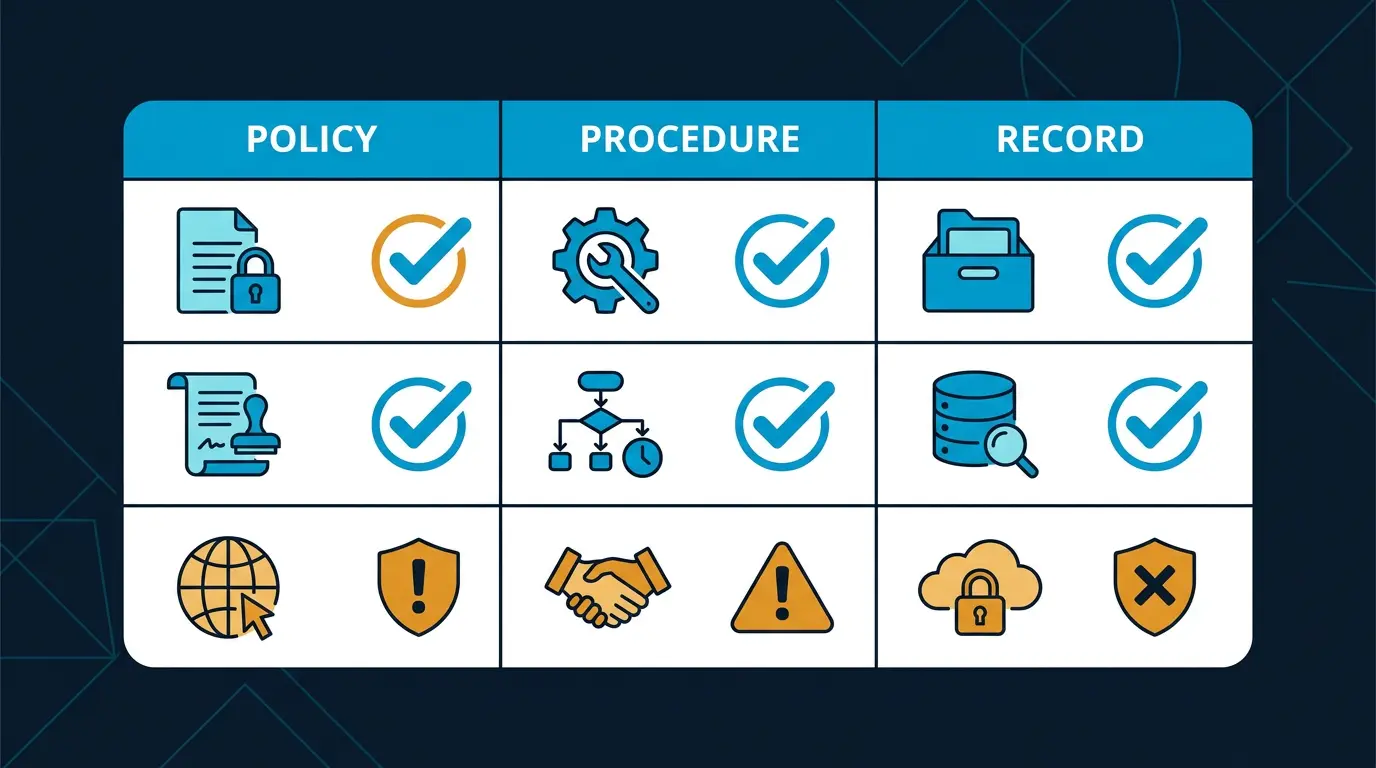
!Compliance requirements matrix showing GDPR, age verification, terms & conditions, and privacy policies for US, UK, EU jurisdictions *Legal requirements by jurisdiction: GDPR, age verification, compliance obligations for US, UK, and EU dating sites*
UK: Advertising Standards Authority (ASA)
The ASA enforces the CAP Code (Advertising Standards Code):
- Ads must be legal, decent, honest, and truthful
- Don't exaggerate success rates or member outcomes
- Don't use misleading imagery
- Testimonials must be real and representative
- Sexual imagery must be appropriate to the medium
The ASA can order ads to be withdrawn and publish upheld complaints.
US: FTC Act Section 5
The FTC enforces truth in advertising:
- Claims must be substantiated with "competent and reliable scientific evidence"
- If you claim "X% of members find a relationship," you must be able to prove it
- Testimonials must be authentic and not paid endorsements (unless clearly disclosed)
- Endorsers must actually use and believe in the product
Violators face civil penalties and corrective advertising requirements.
EU: Unfair Commercial Practices Directive
You can't engage in:
- False or misleading advertising
- Aggressive marketing practices
- Testimonials that aren't genuine
- Hidden advertising costs
Terms of Service Requirements
Your Terms of Service (ToS) is a legal contract with users. It must be clear, fair, and legally sound.
Minimum Required Clauses
- Service Description: what the user gets, what tiers/pricing exist
- User Obligations: what users must and must not do (no harassment, no illegal activity)
- Acceptable Use Policy: detailed rules about content and behavior
- Intellectual Property: who owns user content, what rights you retain
- Limitation of Liability: you're not liable for lost profits, consequential damages, etc.
- Indemnification: users agree to indemnify you for violations
- Dispute Resolution: how disputes are handled (arbitration vs. court)
- Termination: you can terminate accounts for violations
- Governing Law: which jurisdiction's laws apply
- Age Requirement: users must be 18+
- Modifications: you can change ToS with notice
- Payment Terms: subscription details, auto-renewal, refund policy
- User Content Moderation: you can remove illegal or harmful content
- Third-Party Links: you're not responsible for external sites
- Disclaimers: the service is provided "as is"
- Privacy Policy Link: link to your privacy policy
Specific Dating Site Clauses
- Scam/Romance Fraud Warning: users are responsible for protecting themselves against fraud
- Non-Commercial Use: users can't use the platform for business purposes
- Bot Policy: you can remove automated accounts
- Photo Verification: users agree to allow identity verification if required
- Safety Disclaimer: you're not responsible for off-platform meetings or relationships
- No Guarantee of Matches: you can't guarantee users will find matches or relationships
Fairness Requirements
Under consumer protection laws (especially EU), unfair terms are unenforceable:
- Unilateral modification clauses: you can change terms with notice, but can't retroactively change users' obligations
- Unlimited liability: you can limit liability, but often not for fraud or gross negligence
- Automatic fee renewals: must be clear and cancellation must be easy
Enforcement Best Practice
- Use a reputable legal template (Termly, LawBite, Prolific Legal)
- Customise for your dating niche and jurisdiction
- Have a lawyer review (500-1,500 USD for a one-time review)
- Display prominently and require explicit acceptance (checkbox, not just scroll-through)
- Keep a record of when users accepted
Privacy Policy Requirements
Your Privacy Policy is another legal document, distinct from ToS.
GDPR Requirements (UK/EU)
Your privacy policy must include:
- Identity of the data controller (you)
- Purposes of processing each category of data
- Legal basis for each processing activity
- Recipients of the data (payment processor, email provider, etc.)
- Retention periods for each data type
- Rights of data subjects (access, erasure, portability, objection)
- How to exercise these rights
- Information about automated decision-making
- Contact for privacy questions or complaints to the ICO
CCPA Requirements (US)
Your privacy policy must disclose:
- Categories of personal information collected
- Sources of information
- Business or commercial purposes for collection
- Categories of third parties you share data with
- Rights of California residents (access, deletion, opt-out)
- How to exercise these rights
- Non-discrimination for exercising rights
Dating Site Specific Considerations
- Clarify what constitutes "sensitive" data: photos, sexual preferences, health information
- Explain data retention and deletion policies
- Disclose third-party integrations: payment processors, email providers, analytics
- Explain your moderation and reporting processes
- Clarify what happens to data after account deletion
- Explain age verification methods and data retention
Implementation
- Use a privacy policy generator like Termly (starting at 10 USD/month) or iubenda (starting at 7.50 EUR/month)
- Customise templates for dating-specific data
- Include links to request data deletion or access
- Update when you change data practices
- Have a version history dated
Jurisdiction Comparison Table
| Requirement | UK | US | EU | Australia |
|---|---|---|---|---|
| Business Registration | Ltd Company required | LLC recommended | Required per member state | Business registration required |
| Data Protection | GDPR + UK DPA 2018 | CCPA (CA only) + FTC | GDPR + DSA | Privacy Act + Australian Consumer Law |
| Age Verification | Mandatory (OSA 2025) | Emerging (state-by-state) | Recommended, DSA requirement for 10K+ | Recommended |
| Content Moderation | 24-hr response (OSA) | Best practice | Transparent moderation (DSA) | Best practice |
| CSAM Detection | Required to report | PhotoDNA mandatory | Required to report | Required to report |
| Refund Rights | Auto-renewal disclosure | ROSCA: clear consent required | 14-day withdrawal right | 14-day withdrawal right |
| Advertising | ASA compliance | FTC Section 5 | UCPD compliance | AACCC compliance |
| Payment Processing | PCI-DSS standard | PCI-DSS standard | PCI-DSS standard | PCI-DSS standard |
| Privacy Officer | DPO (if required) | Recommended | DPO or RPO (if required) | Privacy officer (recommended) |
| Typical Setup Cost | 1,500-3,000 GBP | 1,000-2,500 USD | 2,000-4,000 EUR | 1,500-2,500 AUD |
| Typical Annual Compliance Cost | 400-1,200 GBP | 300-1,000 USD | 600-1,500 EUR | 400-1,000 AUD |
Cookie Consent and Tracking
If you use analytics, tracking pixels, or advertising pixels, you must disclose and obtain consent.
GDPR: Cookie Consent Mandatory
Under GDPR and ePrivacy Regulations:
- You must obtain explicit consent before placing non-essential cookies
- Your consent banner must be clear and easy to decline
- "Essential" cookies (session, security) don't need consent
- "Non-essential" cookies (analytics, marketing, advertising) require affirmative consent
You can't use dark patterns (making decline harder than accept). The UK ICO and EU DPAs actively fine sites with poor consent mechanisms.
Implementation
- Use a Consent Management Platform (CMP): OneTrust, TrustArc, or Cookiebot (costs 200-1,000 USD annually)
- Clearly separate essential from non-essential cookies
- Allow users to decline non-essential cookies without penalty
- Provide a consent preference center
- Document consent choices
US: No Federal Cookie Law
The US has no federal cookie consent requirement, but:
- California CCPA requires disclosure of data collection and use
- Some states require opt-out mechanisms
- Google's approach: implement consent mechanisms for compliance with EU/UK standards, even for US users
Most sites use the same consent banner globally to simplify compliance.
Key Takeaways
- Business registration is mandatory in all jurisdictions; structure varies (UK Ltd, US LLC, EU entity)
- GDPR (UK/EU) is the strictest privacy law globally; comply with it if you have any EU/UK users
- Age verification is rapidly becoming mandatory, starting with the UK Online Safety Act; implement it from day one
- Content moderation is a legal obligation, not just good practice; implement automated systems and documented processes
- Payment processing requires PCI-DSS compliance; use reputable processors like Stripe rather than handling cards directly
- Consumer protection laws (GDPR, CCPA, DSA) grant users rights to access, delete, and control their data; implement these systems
- Terms of Service and Privacy Policy are non-negotiable legal documents; use templates but have legal review before launch
- FTC advertising rules require substantiation of claims; don't exaggerate success rates or match guarantees
- Online Safety Act, Digital Services Act, and similar regulations are increasingly enforced; non-compliance carries fines and business suspension
- Setup typically costs 1,000-5,000 USD depending on jurisdiction; ongoing compliance costs 300-1,500 USD annually
- Age verification costs 0.15-0.50 per user; budget accordingly when projecting costs
- Moderation infrastructure must be documented and responsive; legal liability is reduced by demonstrating good-faith moderation efforts
Key Takeaways
- Business registration is mandatory in all jurisdictions; structure varies (UK Ltd, US LLC, EU entity)
- GDPR (UK/EU) is the strictest privacy law globally; comply with it if you have any EU/UK users
- Age verification is rapidly becoming mandatory, starting with the UK Online Safety Act; implement it from day one
- Content moderation is a legal obligation, not just good practice; implement automated systems and documented processes
- Payment processing requires PCI-DSS compliance; use reputable processors like Stripe rather than handling cards directly
- Consumer protection laws (GDPR, CCPA, DSA) grant users rights to access, delete, and control their data; implement these systems
- Terms of Service and Privacy Policy are non-negotiable legal documents; use templates but have legal review before launch
- FTC advertising rules require substantiation of claims; don't exaggerate success rates or match guarantees
- Online Safety Act, Digital Services Act, and similar regulations are increasingly enforced; non-compliance carries fines and business suspension
- Setup typically costs 1,000-5,000 USD depending on jurisdiction; ongoing compliance costs 300-1,500 USD annually
- Age verification costs 0.15-0.50 per user; budget accordingly when projecting costs
- Moderation infrastructure must be documented and responsive; legal liability is reduced by demonstrating good-faith moderation efforts
DatingPartners provides platform-level GDPR, Online Safety Act, and PCI-DSS compliance out of the box. You focus on moderation policy and member trust.
Visit DatingPartners.com →