
SMS and messenger channels are powerful for dating affiliate marketing and dangerous if used carelessly. This guide explains how they work and why consent and compliance have to come first.
What SMS and messenger affiliate marketing is
SMS and messenger affiliate marketing means using text messaging and messaging-app channels to promote dating offers to an audience, and earning affiliate commission when people from that audience convert.
SMS, text messaging to mobile phones, and messenger channels, the messaging apps and platforms people use to communicate, are direct channels: they reach a person in the personal, immediate space of their messages. An affiliate using these channels promotes dating offers, a dating site, a dating app, by messaging an audience and inviting them, through that message, to a dating offer the affiliate is promoting for commission.
This is one channel among the many an affiliate can use. The link-building guidance covers SEO; an affiliate can also use advertising, content, social presence and email. SMS and messenger are the messaging channels in that mix, and they have a distinctive character: more direct and more personal than most, and, as the rest of this guide stresses, more tightly governed by consent and anti-spam rules than most.
It is worth being clear that this guide is about the legitimate use of these channels: messaging an audience that has genuinely agreed to be messaged. The opposite, sending unsolicited marketing messages to people who never consented, is spam, it is unlawful, and it is destructive, and the guide is emphatic about that throughout. The whole point of the guide is that SMS and messenger can be genuinely effective dating affiliate channels, but only when used the legitimate, permission-based way.
For an affiliate, the starting point is to understand SMS and messenger affiliate marketing as the use of these direct, personal messaging channels to promote dating offers, and to understand from the outset that, more than almost any other channel, their legitimate use is defined by consent.
Why these channels work for dating
Used legitimately, SMS and messenger channels can work genuinely well for dating affiliate marketing, and an affiliate should understand why, because the reasons are real.
The first reason is directness and immediacy. A message reaches a person directly, in the personal space of their phone or messaging app, and is typically seen quickly. Compared with channels where the affiliate's message competes for attention in a crowded feed or a search results page, a message to someone who has agreed to receive messages arrives directly and is genuinely likely to be seen.
The second reason is the personal nature of the channel. Messaging is, by its nature, a personal channel, the channel people use to communicate with the people in their lives. A dating offer reaching a person through a personal messaging channel, when they have agreed to it, can feel more direct and more personal than the same offer in a more impersonal channel.
The third reason is fit with dating. Dating is itself a personal subject, and dating is increasingly experienced through the phone. Reaching a willing audience about dating, on the device and in the channels where they already do their dating, is a natural fit.
The fourth reason is the value of an owned, permission-based list. An affiliate who has built a genuine, permission-based messaging list, of people who agreed to be messaged, has an owned audience they can reach directly, without paying an advertising platform each time. As the wider portfolio strategy notes, an owned audience is genuinely valuable. A permission-based messaging list is exactly that kind of owned asset.
These genuine strengths are why SMS and messenger are worth an affiliate's attention. But every one of them depends on the channel being used legitimately, on the messages going to people who genuinely agreed to receive them. The same directness that makes a permission-based message effective makes an unsolicited message intrusive and unlawful. So the strengths are real, and they are entirely conditional on the consent and compliance that the rest of this guide insists on.
For an affiliate, the lesson is that SMS and messenger genuinely work for dating, directness, personal character, fit, an owned audience, but only when used the permission-based way, which is the necessary foundation for any of the strengths to be realised.
The consent and compliance imperative
The single most important thing in this whole guide is the consent and compliance imperative, and an affiliate must internalise it before using these channels at all.
The imperative is this: marketing messages sent through SMS and messenger channels generally require the recipient's prior consent, and sending unsolicited marketing messages to people who have not consented is unlawful, damaging and self-destructive.
This is not a minor regulatory footnote; it is the defining fact about these channels. Across jurisdictions, the law treats direct marketing messages to individuals, and SMS and messaging-app marketing in particular, as something that generally requires the recipient to have agreed to receive them. The detail varies by jurisdiction, and the rules connect to the broader data-protection and ePrivacy framework the trust-and-safety guidance describes, but the consistent core is that an individual should not be sent marketing messages they did not agree to.
The consequences of ignoring this are serious and they fall on the affiliate from several directions at once. There is the legal consequence: sending unsolicited marketing messages can breach the law, with real penalties. There is the platform consequence: the messaging platforms and the mobile carriers have their own rules, they detect and act against spam, and an affiliate who spams will find their ability to message shut down, numbers blocked, accounts banned, the deliverability the later section describes destroyed. There is the reputational consequence: spam damages the affiliate's reputation and, as the affiliate-fraud guidance describes for fraud, damages the dating advertisers and the whole ecosystem the affiliate depends on. And there is the simple ineffectiveness: unsolicited messages to uninterested people convert badly anyway, while annoying and alienating the recipients.
So the consent imperative is not a constraint fighting against effective SMS and messenger marketing; it is the precondition of it. The legitimate, permission-based approach is the only one that is lawful, the only one the platforms permit, the only one that protects the affiliate's reputation and deliverability, and, because it reaches people who genuinely want the messages, the only one that genuinely works.
For an affiliate, the imperative to carry through everything that follows is absolute: SMS and messenger marketing is permission-based or it is nothing. Build consent first, or do not use these channels at all.
SMS marketing rules
SMS marketing specifically is governed by a recognisable set of rules, and an affiliate using SMS should understand them, while checking the specifics for their jurisdiction.
The core rule, as the consent imperative established, is prior consent. An affiliate should send marketing SMS only to people who have genuinely agreed to receive marketing text messages. That consent should be genuine and informed: the person knew they were agreeing to receive marketing messages, of this kind, when they opted in. Consent buried in the small print of something unrelated, or assumed without the person genuinely agreeing, is not genuine consent.
A second rule is honest identification. A marketing SMS should make clear who it is from, so the recipient knows who is messaging them, rather than arriving as an anonymous or disguised message.
A third rule is the opt-out. A marketing SMS programme must give recipients a clear, easy way to stop receiving messages, and must honour those opt-outs promptly and completely. A person who has opted out must not continue to be messaged. The opt-out is a firm requirement, not a courtesy.
A fourth area is the platform and carrier rules. Beyond the law, the mobile carriers and the SMS platforms an affiliate uses to send messages have their own rules and requirements for marketing SMS, and an affiliate must comply with those too. The carriers actively police SMS for spam, and breaching their rules leads to blocked messages and shut-down sending ability.
A fifth area is the content and conduct rules: marketing SMS content is subject to the same honesty standards as any advertising, the advertising-compliance guidance applies, and there are often rules around timing, frequency and the nature of content.
The detail of all of this varies by jurisdiction and changes, so an affiliate should confirm the current specifics for the markets they are messaging into. But the consistent core, genuine prior consent, honest identification, an honoured opt-out, compliance with carrier and platform rules, honest content, is stable, and an affiliate should build their SMS practice on it.
For an affiliate, the guidance is to treat SMS marketing as a consent-first, opt-out-respecting, carrier-rule-following, honest discipline, and to confirm the jurisdiction-specific detail rather than assuming.
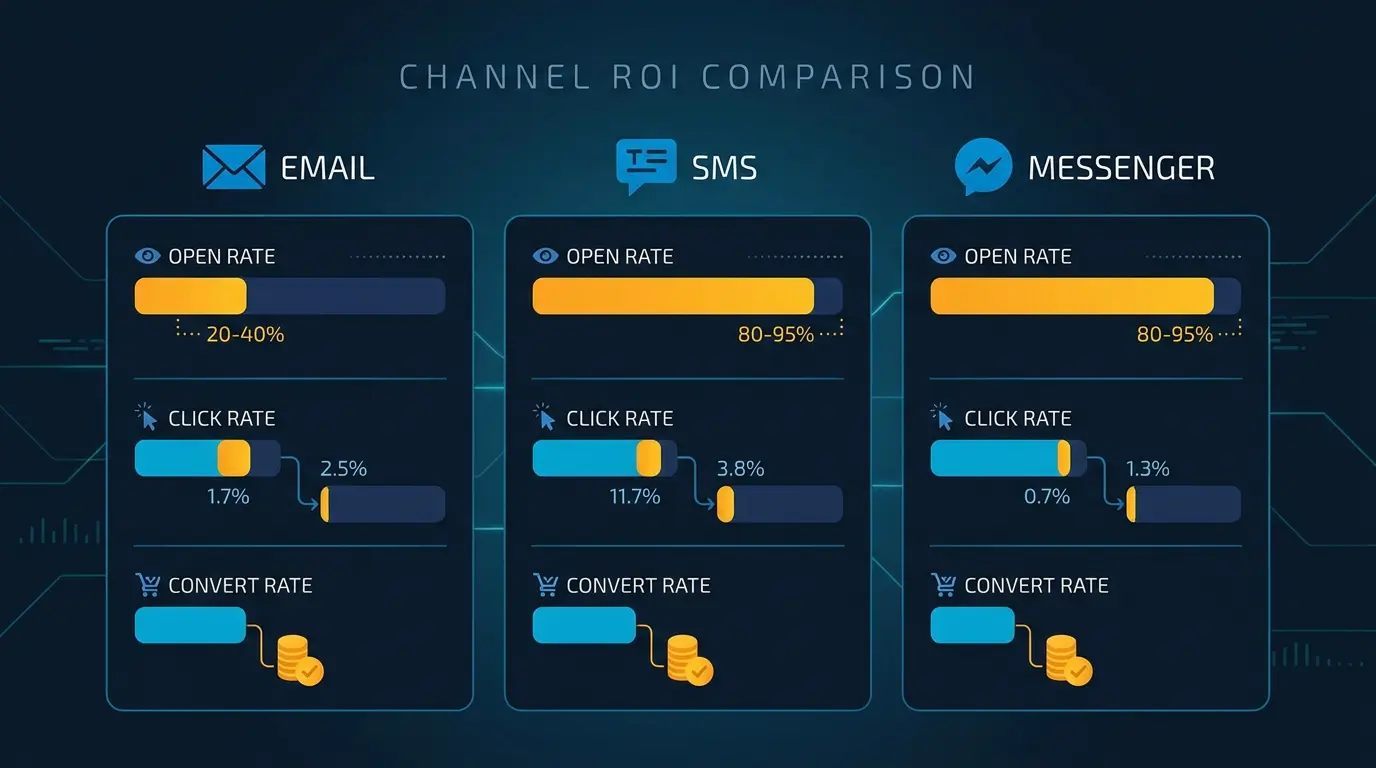
Messenger channel rules
Messenger channels, the messaging apps and platforms, have their own rules, and an affiliate using them should understand that these channels are, if anything, even more tightly governed than SMS in some respects.
The first thing to understand is that messenger platforms each have their own policies governing what may be done on them, and those policies typically place significant restrictions on marketing and commercial messaging. The messaging apps are built for personal communication, and they generally do not welcome being used as open marketing channels. An affiliate using a messenger platform must comply with that platform's specific policies, and those policies often restrict commercial and marketing messaging substantially, sometimes permitting it only in defined, consent-based ways, sometimes not at all in certain forms.
The second thing is that the consent principle applies just as firmly. Messaging a person on a messenger platform who has not agreed to be contacted in that way for marketing is, like unsolicited SMS, unsolicited marketing, and it is both a likely breach of the platform's policy and, depending on the jurisdiction and the channel, a potential breach of the law. The directness and personal nature of messenger channels make unsolicited use particularly intrusive.
The third thing is that messenger platforms actively enforce their policies. They detect and act against accounts that use the platform for spam or that breach the marketing rules: accounts are restricted and banned. An affiliate who misuses a messenger channel will lose access to it.
The fourth thing is that the messenger landscape is varied and changing. Different messaging platforms have different policies, different permitted forms of business and consent-based messaging, and these evolve. An affiliate using messenger channels should understand the current policy of each specific platform they use, rather than assuming a single set of rules covers all of them.
The honest summary is that messenger channels can be used for dating affiliate marketing, but only within each platform's specific policies and only on a genuine consent basis, and an affiliate should treat the platforms' policies as a hard constraint, because the platforms enforce them and breaching them means losing the channel.
For an affiliate, the guidance is to learn and comply with the specific policy of each messenger platform used, to apply the consent principle as firmly as for SMS, and to recognise that misuse leads to losing access to the channel entirely.
Building a permission-based list
Since both SMS and messenger marketing are permission-based, the foundational work for an affiliate is building a genuine, permission-based list, and an affiliate should understand how to do it well.
A permission-based list is an audience of people who have genuinely, knowingly agreed to receive marketing messages from the affiliate, through the channel in question. Building such a list is the legitimate alternative to the unlawful shortcut of messaging people who never agreed.
Building a permission-based list means giving people a genuine reason and a genuine opportunity to opt in. People opt in to receive messages when there is something in it for them: genuinely useful or interesting content, genuine value, a genuine reason to want to hear from the affiliate. An affiliate building a list around their niche, who offers genuine value to that niche audience, gives people a real reason to agree to be messaged. This connects to the content-led approach the link-building guidance describes: genuine value is what earns an audience, in list-building as in SEO.
Building a permission-based list means obtaining genuine, informed consent at the point of opt-in: the person clearly understands they are agreeing to receive marketing messages, of the kind they will actually receive, through the channel in question. The consent must be real, not assumed, not buried, not tricked.
Building a permission-based list means keeping proper records of consent, so the affiliate can demonstrate that the people on their list genuinely opted in, which is both good practice and, in data-protection terms, often a genuine requirement.
And building a permission-based list means treating it as the genuine, valuable, owned asset it is: an audience the affiliate has earned the right to reach, to be respected and not abused.
The honest framing is that building a permission-based list is slower and more effortful than the unlawful shortcut of buying or scraping a list of people who never agreed. But the shortcut is unlawful, destroys deliverability and reputation, and does not work. The permission-based list is the only legitimate foundation, and it is also a genuinely valuable owned audience, exactly the kind of asset the wider portfolio strategy values.
For an affiliate, the guidance is to build a genuine permission-based list by offering genuine value, obtaining genuine informed consent, keeping consent records, and treating the list as a valuable owned asset, because a permission-based list is the only lawful and only effective foundation for these channels.
Honest messaging practice
Having built a permission-based list, an affiliate must message it honestly, and honest messaging practice is both a compliance requirement and what keeps the channel working.
Honest messaging means the messages themselves are truthful and not misleading. The advertising-compliance guidance's principle applies in full to SMS and messenger: a message promoting a dating offer must not overstate, must not deceive, must not use fake-message formats, must not mislead the recipient about what the dating offer is or what it costs. The personal, direct nature of these channels makes deceptive messaging particularly damaging to trust.
Honest messaging means respecting the consent that was given. The affiliate should message the list about the kind of thing the people opted in for, at a reasonable frequency. Someone who agreed to receive messages did not agree to be bombarded, and an affiliate who over-messages their list, or messages them about things far from what they opted in for, abuses the consent and drives people to opt out.
Honest messaging means honouring opt-outs immediately and completely, as the rules require and as respect for the audience demands.
Honest messaging means genuine value in the messages. A permission-based list stays engaged when the messages are genuinely worth receiving. Messages that are all hard selling, with no genuine value, wear out the audience's patience even when they consented. The affiliate who messages their list with genuine value, and promotes dating offers within that genuinely valued relationship, keeps the list engaged and effective.
And honest messaging means treating the recipients as people, not as a list to be exploited. The personal nature of these channels means the affiliate is, in effect, a guest in the recipient's personal messaging space. An affiliate who respects that, who messages honestly, valuably and not too often, maintains a genuine relationship; an affiliate who exploits it burns it.
For an affiliate, the guidance is that honest messaging practice, truthful messages, respect for the consent given, honoured opt-outs, genuine value, treating recipients as people, is both required and what keeps a permission-based list a working, valuable asset rather than a burned-out one.
Deliverability and sender reputation
An affiliate using SMS and messenger channels should understand deliverability and sender reputation, because these are what determine whether the affiliate's messages actually reach people, and they are destroyed by the bad practices this guide warns against.
Deliverability is whether the messages an affiliate sends actually arrive. It is not automatic. The carriers, the messaging platforms and the systems in between assess messages and senders, and they filter, block or fail to deliver messages and senders they judge to be spam or to be breaching the rules. A message that is not delivered reaches no one and earns nothing, however good the offer.
Sender reputation is the standing the affiliate's sending, their numbers, their accounts, their sending behaviour, has with those carriers and platforms. A sender with a good reputation, one that sends to genuine, consenting recipients, gets few complaints, and follows the rules, has good deliverability: its messages get through. A sender with a poor reputation, one associated with spam, complaints, unsolicited messaging and rule-breaking, has poor deliverability: its messages are filtered and blocked, and eventually its ability to send is shut down entirely.
The crucial point is that everything this guide has warned against, messaging without consent, buying or scraping lists, over-messaging, deceptive content, ignoring opt-outs, is exactly what destroys sender reputation and deliverability. Spam generates complaints and triggers the carriers' and platforms' anti-spam systems, the affiliate's reputation collapses, and the channel stops working. The bad practices do not just risk legal and reputational consequences; they directly and mechanically destroy the affiliate's ability to deliver messages at all.
Conversely, everything this guide recommends, genuine consent, a permission-based list, honest messaging, respected opt-outs, reasonable frequency, protects deliverability. A sender who messages a genuine permission-based list honestly generates few complaints, keeps a good reputation, and keeps its messages getting through.
For an affiliate, the lesson is that deliverability and sender reputation are the practical mechanism that rewards legitimate practice and punishes spam: the permission-based, honest approach is not only the lawful one but the one that keeps the channel mechanically working, while spam destroys the affiliate's own ability to deliver.

Measuring these channels
SMS and messenger channels, like any affiliate channel, should be measured, so an affiliate knows whether they are working, and an affiliate should measure them sensibly.
The affiliate should measure the building of the permission-based list: how the list is growing, from which sources, at what cost. A healthily growing genuine list is the foundation of the channel.
The affiliate should measure engagement: whether the people on the list are genuinely engaging with the messages. Engagement is a sign the list is genuine, the messaging is honest and valuable, and the consent is being respected. Falling engagement, or rising opt-outs, is a warning that the affiliate is over-messaging, messaging poorly, or has a weak list.
The affiliate should measure deliverability: whether messages are actually getting through, because, as the previous section explained, deliverability is the channel's mechanical foundation, and a deliverability problem is an urgent warning.
The affiliate should measure the genuine outcome: the dating conversions the channel produces and the resulting commission. As the KPI and revenue-share guidance explain, what matters is genuine, converting, retained members, not raw message volume. A channel that produces genuine dating members who convert and, on , stay, is working; a channel with high message volume but poor genuine conversion is not.
And the affiliate should watch the warning signs that connect to compliance and reputation: complaints, opt-out rates, any signs of deliverability decline. These are not only performance metrics; they are early warnings about the health and the compliance of the affiliate's messaging.
For an affiliate, the guidance is to measure these channels by list growth, genuine engagement, deliverability, and above all genuine dating conversions and commission, while watching complaints and opt-outs as compliance-and-reputation warning signs.
Common mistakes
The defining mistake is sending unsolicited marketing messages, messaging people who never genuinely consented, which is unlawful, breaches carrier and platform rules, destroys deliverability and reputation, and does not even work.
The second is buying or scraping a list rather than building a genuine permission-based one, which is the same unlawful, self-destructive shortcut in another form.
The third is ignoring the platform and carrier rules, treating only the law as the constraint, when the carriers and messenger platforms enforce their own rules and breaching them means losing the channel.
The fourth is abusing a genuine list: over-messaging, messaging far from what people opted in for, deceptive content, ignoring opt-outs, which burns out even a permission-based list and destroys sender reputation. The fifth is measuring by raw message volume rather than by genuine dating conversions, and ignoring complaints and opt-outs as the warning signs they are. Build consent first, message honestly, respect the rules, and the channel works.
What to read next
For the commission models these channels feed, read dating revenue share explained. For the honesty standards, see dating advertising compliance. For measuring affiliate performance, read dating affiliate KPIs and reporting. And to understand the dating offers behind the messaging, DatingPartners.com can walk through the platform.
Fortitude Send supports SMS compliant workflows. Ask for a dating use case.
Visit DatingPartners.com →