
Link building is one of the most powerful and most abused parts of SEO. For a dating site, doing it well means doing it the slow, honest way. This guide explains how.
What link building is and why links matter
Link building is the practice of getting other websites to link to your website. To understand why anyone would work at that, an operator needs to understand why links matter to search engines.
Search engines rank websites, deciding which pages to show, and in what order, for a given search. To do that they need to judge which sites are authoritative and trustworthy on a topic. One of the long-standing signals they use is links. When one website links to another, it is, in effect, a kind of reference or endorsement: the linking site is pointing its visitors to the linked site as worth seeing. Search engines treat a link, broadly, as a vote of confidence.
A site that has many links from other genuine, reputable sites is, by this logic, a site that the wider web treats as worth referencing, and search engines tend to regard it as more authoritative and rank it accordingly. A site with few links, or links only from poor sources, lacks that signal.
This is why link building exists as a discipline. An operator who wants their dating site to rank well in search, and so to attract the valuable, low-cost traffic that good search visibility brings, has a reason to want genuine, reputable sites to link to theirs.
It is worth saying at the outset that links are one signal among several. Search engines weigh many things, and the content guidance and the rest of an operator's SEO matter alongside links. But links remain a genuinely important signal, and link building remains a genuinely valuable, if difficult, discipline.
For an operator, the starting point is to understand link building as the work of getting genuine, reputable sites to link to theirs, because those links act as authority signals that help the site rank in search.
Why link building is hard in dating
Link building is hard everywhere, but it is particularly hard for dating sites, and an operator should understand why before starting, because the difficulty shapes the realistic approach.
The first reason is competition. Dating is a competitive category. Many sites want to rank for dating searches, and many of them have been building links and authority for a long time. A new or smaller dating site is link building in a crowded, well-contested space.
The second reason is the category's reputation. Dating, fairly or not, is a category that some publishers and site owners are wary of linking to. A site that links to a dating site is, in a small way, associating itself with the dating category, and some are reluctant. This makes genuine, reputable links to a dating site harder to earn than links in a more neutral category.
The third reason is that the difficulty has historically pushed dating link building toward bad practices. Because earning genuine links is hard, parts of the dating world have, over the years, leaned heavily on the spammy, manipulative link-building practices that the what-to-avoid section describes. This history means dating link profiles are often littered with poor-quality and manipulative links, and search engines, aware of this, may scrutinise dating link profiles carefully.
The fourth reason, related, is that an operator taking over or building on an existing dating domain may inherit a link profile shaped by past bad practices, which the disavow section addresses.
None of this means link building for a dating site is impossible or not worth doing. It means an operator should go in realistic: it is a hard, slow, competitive discipline, the easy shortcuts are genuinely dangerous, and the realistic path is the patient, honest, content-led one the rest of this guide describes.
For an operator, the lesson is that dating link building is genuinely hard, harder than in many categories, and that the difficulty is exactly why the honest, content-led approach, rather than a shortcut, is the only sustainable one.
The core principle: earn, do not buy
The single most important principle of dating link building is this: links should be earned, not bought, and an operator who internalises this avoids the category's worst mistakes.
"Earning" a link means a genuine, reputable site links to the operator's site because there is a genuine reason to, because the operator's site has something the linking site genuinely wants to reference for its own visitors. The link is the result of the operator's site being worth linking to.
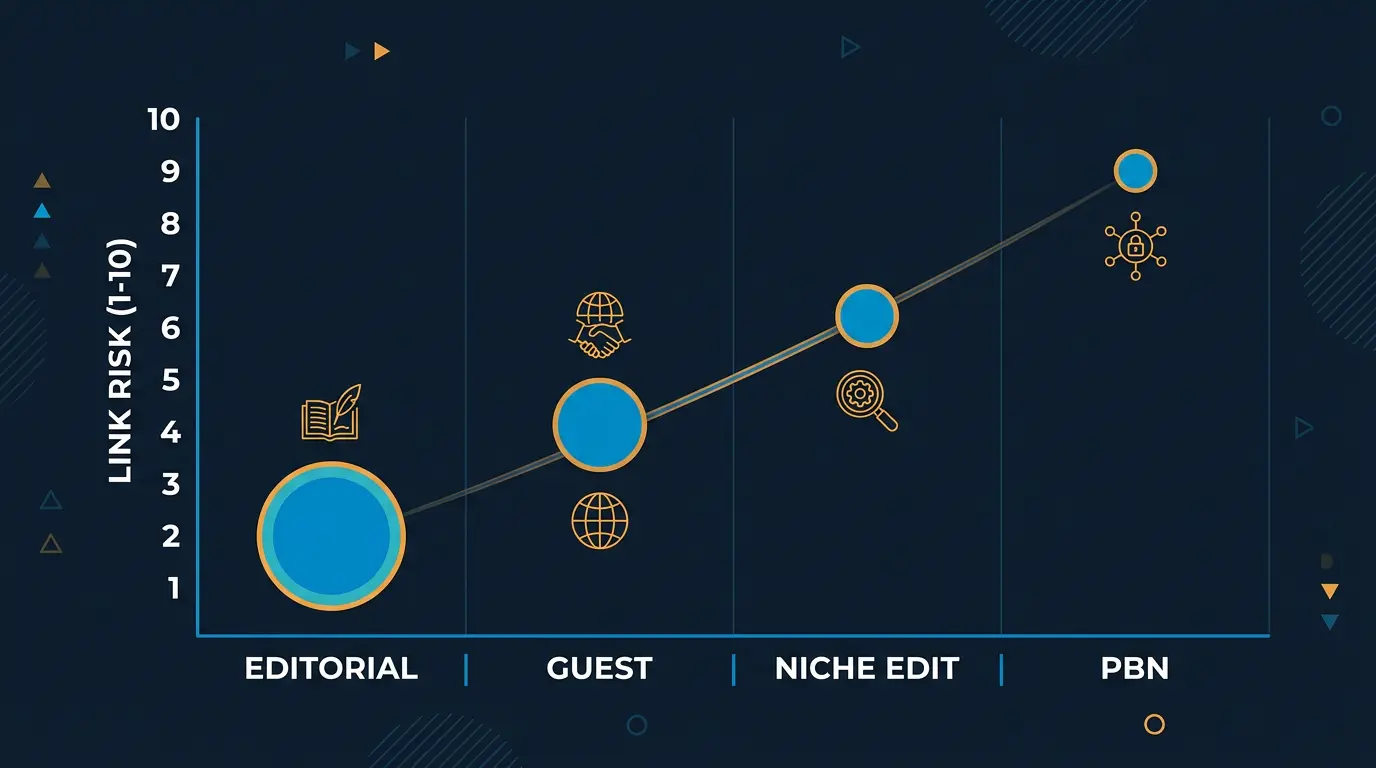
"Buying" links, in the sense meant here, refers to the family of manipulative practices, paying for links, link schemes, automated link generation, low-quality directory and link-farm links, and the rest, that try to manufacture the appearance of authority without earning it. The what-to-avoid section details these.
The reason the earn-not-buy principle is non-negotiable is that search engines have spent many years getting good at telling the difference. Manipulative, bought, schemed links are, increasingly, not just ineffective but actively dangerous: search engines can detect link manipulation and can penalise sites for it, as the what-to-avoid section explains. The shortcut does not just fail to help; it can do real harm.
Earned links, by contrast, are the genuine article, the real authority signal search engines are looking for, and they are durable: a genuine link earned because the site deserved it is not a liability waiting to be penalised.
The earn-not-buy principle reframes link building entirely. It means link building is not, fundamentally, an outreach-and-acquisition activity bolted onto a site; it is a consequence of building a site genuinely worth linking to. The operator's real link-building work is making their site, and especially its content, something genuine sites want to reference. The next two sections develop that.
For an operator, the core principle to carry through everything that follows is: earn links by deserving them, never buy or scheme them, because earned links are the genuine signal and manipulative links are a danger, not a shortcut.
Content as the foundation
If links are earned by deserving them, the question becomes what makes a dating site worth linking to, and the foundational answer is content.
A genuine, reputable site links to another site when that other site has something genuinely worth pointing their visitors to. For a dating site, the thing most able to be that is genuinely useful content: content that is informative, authoritative, well-made, and genuinely valuable to a reader interested in the topic.
A dating business sits on top of a great deal that is genuinely interesting and useful to write about: the experience of dating, advice and guidance for the niche the site serves, insight into the world the niche audience lives in, genuine information that the audience and others find valuable. A dating site, or a dating brand, that creates genuinely good content of this kind builds something that other sites have a real reason to reference.
This is the content-led approach to link building, and it is, for dating, the realistic foundation. Rather than chasing links directly, the operator invests in creating genuinely valuable content, and genuine links follow, because genuine content is what genuine sites link to. The content does double duty: it attracts and serves the audience directly, the content-and-community flywheel the wider portfolio strategy describes, and it earns the links that build search authority.
The content has to be genuinely good for this to work. Thin, generic, low-effort content does not earn links, because no one has a reason to reference it. Content that is genuinely useful, genuinely authoritative, genuinely worth a reader's time, is what other sites link to. This connects to the LLM-and-content quality standards the wider strategy describes: substantial, genuinely useful, well-made content.
For an operator, the foundation of link building is therefore content: invest in creating genuinely valuable content for the niche, and that content becomes the thing that earns links, because it is what genuine sites have a real reason to reference. Link building, done honestly, starts with deserving the links.
Legitimate link-building approaches
With genuine content as the foundation, there are legitimate, honest approaches an operator can take to help genuine links come, and an operator should know the honest playbook.
The first and most important is simply creating genuinely link-worthy content, as the previous section described, and making sure it can be found. Content that is genuinely useful, and genuinely discoverable, will, over time, earn links naturally as people find it and reference it. This is the foundation of all the rest.
The second is genuine outreach: honestly making relevant sites aware of genuinely useful content the operator has created, where there is a real, relevant reason for that site to know about it. This is honest outreach, telling a genuinely relevant site about a genuinely relevant, useful resource, and it is completely different from buying links or spamming requests. The link, if it comes, still comes because the content was worth linking to; the outreach just helped the right site find it.
The third is genuine relationships and participation. An operator who genuinely participates in the world of their niche, the communities, the conversations, the wider ecosystem, builds genuine relationships and a genuine presence, and genuine links can grow from genuine relationships and genuine recognition as a real, knowledgeable participant in the niche.
The fourth is original, genuinely valuable assets: original research, original data, genuinely useful tools or resources relevant to the niche. The wider portfolio strategy notes the value of original statistics and genuinely useful resources, and these are exactly the kind of asset that genuine sites reference, because original, useful material is genuinely worth linking to.
The fifth is digital PR in the honest sense: doing or creating things genuinely newsworthy or genuinely interesting about the dating niche, such that genuine publications have a real reason to cover and reference them.
What unites all of these is that they are ways of helping genuine links come to genuinely deserving content. None of them manufactures authority; all of them are about deserving it and helping it be recognised.
For an operator, the legitimate playbook is: create genuinely link-worthy content and assets, do honest outreach, build genuine niche relationships, and earn genuine coverage, all of which help real links find content that genuinely deserves them.
What to avoid: link schemes and penalties
An operator must clearly understand the practices to avoid, because in dating the temptation toward manipulative link building is strong and the consequences are genuine.
The practices to avoid are the family of manipulative link schemes: buying links for the purpose of manipulating rankings, participating in link exchanges and link networks designed to manufacture links, using automated tools to generate links at scale, acquiring large numbers of low-quality directory, forum or comment links, and the other techniques whose purpose is to fake authority rather than earn it.
The reason to avoid them is twofold. First, they do not sustainably work. Search engines have invested heavily, over many years, in detecting link manipulation, and manipulative links are increasingly devalued, ignored, or counted against a site.
Second, and more seriously, they are dangerous. Search engines can penalise a site for manipulative link building. A penalty can mean a serious loss of search visibility, the site dropping in or disappearing from rankings, which for a business that depends on search traffic is a major blow. Recovering from a link-related penalty is difficult and slow. The manipulative shortcut, then, does not merely fail to help; it can actively damage the business, sometimes severely.
There is a particular danger in dating because, as the why-hard section noted, the difficulty of dating link building has historically pushed operators toward exactly these practices, and the temptation is real. An operator frustrated by how slow honest link building is can be tempted by a service offering quick, cheap links. That temptation should be resisted absolutely. Quick, cheap links are almost always the manipulative kind, and they are a liability, not an asset.
The honest framing connects back to the core principle: there is no safe shortcut. The manipulative practices are a danger dressed as a shortcut. The only sustainable link building is the slow, content-led, earn-not-buy approach.
For an operator, the lesson is unambiguous: avoid link schemes and bought, manufactured links entirely, because they do not sustainably work and they risk genuine, damaging search penalties. The slow honest path is not just the ethical one; it is the only one that does not put the business at risk.
The disavow question
An operator may face a particular link-building issue that is really a clean-up issue: harmful links pointing at the site that the operator did not create, and the tool for managing them is the disavow.
Harmful inbound links can arise in a few ways. An operator who builds on, or takes over, an existing dating domain may inherit a link profile shaped by past bad practices: a history of the manipulative, spammy links the previous owner or era built. A site can also attract harmful links it never sought, sometimes through what is called a negative SEO attempt, where someone points bad links at a site to try to harm it.
The concern is that a profile heavy with manipulative, spammy links can be a liability, exactly the kind of profile that risks the penalties the previous section described, even if the current operator did not build those links.
The disavow is the mechanism for managing this. Search engines provide a way for a site owner to tell the search engine, in effect, to disregard specified links when assessing the site, the operator disavows those links. Used well, the disavow lets an operator who has inherited or attracted a profile of harmful links signal that those links should not count, distancing the site from them.
The disavow has to be used carefully and selectively. It is for genuinely harmful, manipulative links, not for ordinary links. The wider portfolio strategy reflects a careful, selective disavow approach: excluding the genuinely harmful and manipulative links, such as those from a low-quality internal network, while preserving the genuine, high-authority editorial links that are valuable. Disavowing carelessly, sweeping up good links along with bad, would throw away genuine authority. The skill is in distinguishing the harmful links to disavow from the genuine ones to keep.
For an operator, the disavow question is: if the site has inherited or attracted a profile of genuinely harmful, manipulative links, the disavow is the tool for distancing the site from them, but it must be used carefully and selectively, disavowing only the genuinely harmful while preserving genuine, valuable editorial links.
Link building for a white label dating site
For an operator on a dating site, link building has a specific shape, and an operator should understand what is theirs to do.
Link building, like the landing page, the about page and the advertising, is part of the operator's own marketing footprint. The provider builds the dating platform; the operator builds and markets their branded site, and the SEO of that branded site, including its link building, is the operator's domain.
This means link building is genuinely the operator's to own. The operator decides whether and how to invest in it, creates the content that earns links, does the honest outreach, builds the niche relationships, and manages the link profile including any disavow work. The provider does not do the operator's link building.
There is an important interaction with the content-as-foundation principle. The operator's branded site, and the content the operator builds around it, are what earn the links. An operator who invests in genuinely good content for their niche is building both their direct audience appeal and their link-earning foundation. This connects directly to the content-and-community flywheel and the educational-content-hub approach the wider portfolio strategy describes: content is the asset that both serves the audience and earns the authority.
An operator should also be realistic, given the why-hard section, about timescale and effort. Link building for a white label dating brand is a long, patient, content-led discipline, and an operator should treat it as a sustained investment rather than a quick task.
For an operator, the guidance is that link building for a white label dating site is the operator's own marketing work, founded on the genuinely good content the operator creates for their niche, pursued through the honest approaches, and managed patiently over the long term.
Measuring link building
Link building, like any marketing discipline, should be measured, so an operator knows whether the investment is working, and an operator should measure it sensibly.
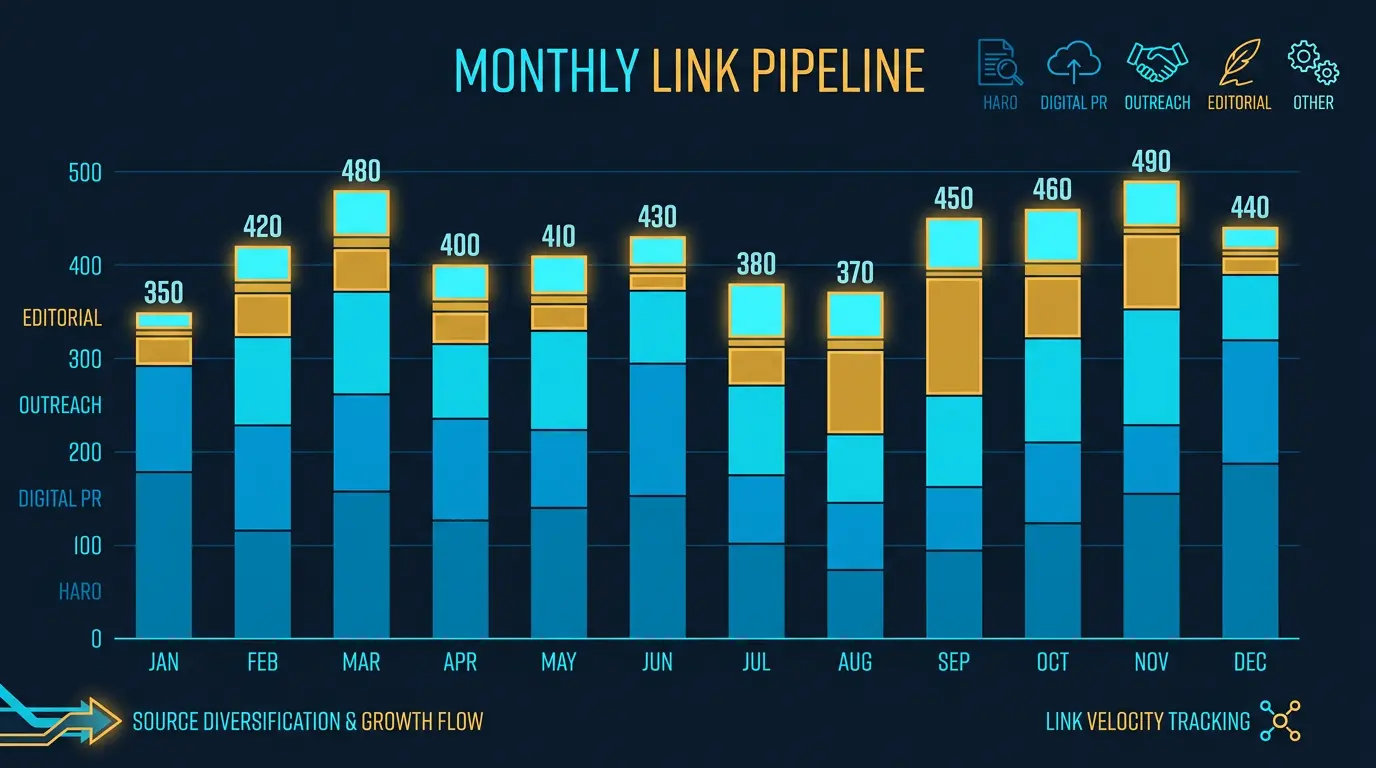
The first thing to measure is the link profile itself: the genuine, reputable links the site is earning over time. The operator should watch whether genuine, quality links from genuine, reputable sites are accumulating, because that growth is the direct output of good link building. Quality matters far more than raw count here: a handful of genuine, reputable links is worth more than a large number of poor ones, and a rising count driven by poor links is a warning, not a success.
The second thing to measure is the effect on search visibility: whether the site's rankings and search traffic for its target terms are improving over time. Link building is, ultimately, in service of search visibility, and improving search rankings and traffic is the genuine outcome the operator is working toward. This connects to the wider analytics discipline: the operator should watch search traffic as part of the acquisition picture.
The third thing to watch is the health of the link profile: the presence of harmful, manipulative links that may need the disavow attention the disavow section described.
The operator should also be patient with the timescale. Link building is slow. Genuine links take time to earn, and their effect on search visibility builds gradually. An operator who measures link building over weeks will see little; an operator who measures it over many months and longer will see whether the patient, content-led investment is genuinely building authority and traffic.
For an operator, the guidance is to measure link building by the genuine quality links earned, by the resulting improvement in search visibility and traffic, and by the health of the link profile, all over a long, patient timescale, because link building is a slow discipline whose results show over the long term.
Common mistakes
The defining mistake is buying or scheming links, manipulative link schemes, bought links, automated and low-quality links, which do not sustainably work and which risk genuine, damaging search penalties.
The second is treating link building as separate from content, chasing links directly instead of building genuinely link-worthy content that earns them, when content is the real foundation.
The third is impatience: expecting fast results from a discipline that is genuinely slow, and abandoning the honest content-led approach for a dangerous shortcut out of frustration.
The fourth is mishandling the disavow, either ignoring a genuinely harmful inherited link profile, or disavowing carelessly and throwing away genuine, valuable editorial links along with the bad. The fifth is measuring by raw link count rather than by genuine link quality and the resulting search visibility. Earn links through genuine content, avoid every manipulative shortcut, be patient, and measure quality.
What to read next
For the content that earns links, the dating software and getting-started content guidance throughout this site applies. For the wider acquisition picture, read dating app analytics: what to measure. For honest promotion standards, see dating advertising compliance. And for the dating offers behind a content strategy, DatingPartners.com can walk through the platform.
WLD Community members get shared HARO and PR opportunities. Join the waitlist.
Visit DatingPartners.com →