
Understanding Romance Scams
Romance scams are a major problem for dating platforms. The UK's National Fraud Intelligence Bureau reports scammers stole over 100 million GBP through romance fraud in recent years, with the average victim losing 10,000-15,000 GBP.
Dating platforms are targeted because:
- Users are in an emotionally vulnerable state
- Trust is easier to establish in early-stage dating
- Users are more likely to move transactions outside the platform
- Platforms provide access to many potential victims
The scammer playbook typically looks like:
- Create fake profile with attractive photos
- Rapidly establish emotional connection
- Build trust over 1-2 weeks
- Create plausible crisis (urgent need, investment opportunity)
- Request money via gift card, wire transfer, or cryptocurrency
- Disappear after money is sent
Your responsibility as a platform isn't to prevent all scams (that's impossible), but to:
- Detect and remove scammers quickly (see fake profile detection)
- Educate members about red flags
- Make reporting easy (see user reporting systems)
- Support victims
- Work with authorities (see law enforcement requests)
Platforms that take romance scam seriously gain trust with both users and regulators, which directly improves user acquisition and retention.
Common Scam Patterns
Pattern 1: The Military Officer
A fake military profile claims to be stationed overseas and can't meet in person. They rapidly establish emotional connection, then claim a family emergency requires money wired overseas.
Profile characteristics:
- Uniform photos (often stolen from real soldiers)
- Limited availability (claims to be on deployment)
- Early mention of relationships, family, future plans
- Emotional language ("I feel like I can be real with you")
Escalation pattern:
- Day 1-3: Build connection, claim to be falling for you
- Day 4-7: Discuss relationships and future plans
- Day 8-10: Introduce "crisis" (injury, family death, money needed for leave)
- Day 11+: Request money via wire transfer or gift card
Pattern 2: The Wealthy Businessman
A fake wealthy businessman profile claims to be traveling or building a business. They move quickly to emotional connection and offer investment opportunities.
Profile characteristics:
- Expensive photos (luxury travel, business settings)
- Early mention of business and wealth
- Focus on lifestyle and ambition
- Offers of help or investment to the victim
Escalation pattern:
- Day 1-5: Establish connection, share business success
- Day 6-10: Compliment heavily and offer investment opportunity
- Day 11-15: Request upfront payment for investment
- Day 16+: Disappear when money is sent
Pattern 3: The Desperate Single Parent
A fake profile portrays a single parent struggling financially. They build emotional connection through shared values and parenting experiences.
Profile characteristics:
- Photos with child (often stolen)
- Focus on shared values, family
- Early emotional sharing
- Stories of financial struggle
Escalation pattern:
- Day 1-7: Build emotional connection through parenting stories
- Day 8-14: Establish trust through vulnerability
- Day 15-21: Introduce financial crisis (child's medical care, custody)
- Day 22+: Request money for emergency
Pattern 4: The Instagram-Style Attraction
A stolen profile from Instagram or TikTok (usually of attractive young woman or man). Moves quickly to WhatsApp or Telegram. May request money for various reasons: travel costs, medical emergencies, visa fees.
Profile characteristics:
- Suspiciously attractive photos
- Limited profile information
- Reluctance to video chat
- Quick move to messaging apps
Escalation pattern:
- Day 1-2: Quick "connection"
- Day 2-3: Move to WhatsApp/Telegram
- Day 3-7: Build familiarity, light flirtation
- Day 7-10: Request money (usually for travel or emergency)
Early Warning Signs
Train your team and members to spot these warning signs.
Profile-Level Red Flags
- Photos appear professionally photographed or stolen (reverse image search returns social media accounts)
- Limited profile information despite weeks of connection
- Consistent excuses for not video chatting
- Inconsistent information (different age, job, location across messages)
- Location shows one place but claims to be traveling elsewhere
- Profile created recently despite claiming to be established professional
Behavioral Red Flags
Early stage:
- Rapid emotional escalation ("I've never felt this way before" after 3 days)
- Excessive compliments and flattery
- Quick move from platform to external messaging (WhatsApp, Telegram)
- Early discussion of relationships and future plans
- Reluctance to discuss personal details beyond surface level
Middle stage:
- Consistency issues in their story (told you they were in London last week, now claiming they've been in Dubai for a month)
- Grammar or language issues inconsistent with claimed background
- Inability to maintain real-time conversation (often delays of hours)
- Excuses for not video chatting ("camera is broken," "bad connection," "at work")
- Photos that appear copied from modeling websites
Late stage (money request):
- Sudden crisis requiring money
- Specific request for gift cards, wire transfer, or cryptocurrency
- Reason money can't be sent directly (investment opportunity, urgent trip)
- Pressure to keep conversation off platform
- Request for secrecy ("don't tell anyone about this investment")
Conversation Pattern Red Flags
Look for language patterns that suggest non-native English speakers using scripts:
- Unusual word choices or phrasing
- Copy-paste responses to different users
- Generic statements that don't respond to specific details
- Formal language in casual conversation
- Grammatical patterns suggesting translation
Example red flag script: "I am a man of principle. My work keeps me travelling frequently. I enjoy fine dining and the culture. I look for someone to share my success with. Do you believe in honest and real relationships?"
This language is too formal and generic, suggesting a script.
Automated Detection Systems
Modern dating platforms use AI and behavioral analytics to detect scammers.
Account Creation Red Flags
Flag new accounts with:
- Photos matching known romance scam databases (Tineye, social media reverse search)
- Rapid profile setup (photo + bio in seconds, suggesting rushed fake profile)
- Email from suspicious domain (free email rather than work email for claimed professional)
- Phone number from unusual country (claiming to be local, but phone is international)
- VPN or proxy IP address
Behavior Scoring
Create a risk score based on user behavior:
| Behavior | Risk Points | Notes |
|---|---|---|
| Moving to external chat in first 24 hours | 5 | Normal for some, but combined with other flags is concerning |
| No video chat request after 7 days | 5 | Real users typically try to video chat |
| Refusing to video chat for 14+ days | 10 | Major red flag |
| Love bombing (5+ compliments per message) | 3 | Scammers praise excessively |
| Money request in first 30 days | 15 | Immediate escalation to payment request |
| Generic copy-paste messages | 3 | Suggests scripted interaction |
| Rapid profile changes (location, info) | 5 | Inconsistency suggests fake account |
| Only messaging, no browsing matches | 5 | Suggests targeting specific victims |
| Multiple failed video chat attempts | 10 | Technical excuses, won't show face |
Accounts scoring 20+ points trigger review. 30+ should be flagged for removal.
Machine Learning Models
Develop ML models based on historical scammer behavior:
- Text analysis of messages (sentiment, urgency, grammar)
- Profile completion patterns
- Behavioral sequences (rapid escalation to external chat)
- Photo analysis (artistic style, reversed image matches)
Training data comes from:
- Confirmed scam reports
- Member complaints
- Law enforcement takedowns
- Victim reports
Red Flag Alerts
Build alerts that surface suspicious activity:
- New account moving to external chat in <2 hours
- User requesting money in first 30 days
- Multiple reports from different users against same account
- Account info inconsistencies flagged
- Photo matches known romance scam database
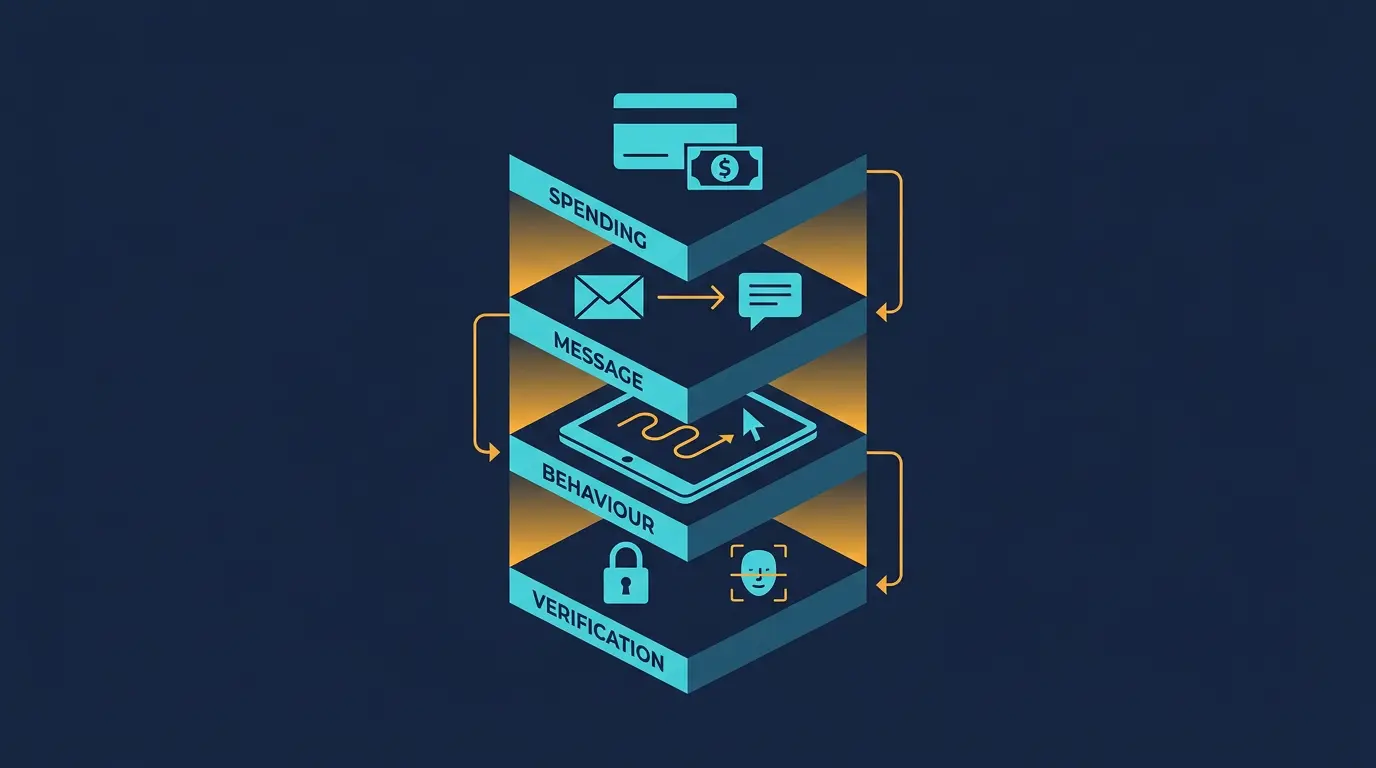
Member Education Strategy
Prevention requires educating members about scam risks.
!Timeline comparison of scammer personas showing escalation patterns and red flags *Timeline comparison of scammer personas showing escalation patterns and red flags*
Onboarding Education
New members should see safety information during signup:
- "Warning: Romance scammers target dating sites. Be careful of anyone asking for money."
- "Scammers often claim to be military, wealthy businessmen, or traveling professionals."
- "Real relationships don't require money upfront."
- Link to detailed guide
In-App Warnings
Show contextual warnings:
- After first external chat (WhatsApp, etc.): "Be cautious sharing personal info outside our platform"
- After money-related conversation: "Real dates don't ask for money upfront. Consider reporting this user."
- After love bombing: "This person is being very complimentary very quickly. Consider whether this feels genuine."
Educational Content
Create and promote content about:
- Red flags (article on dating site, blog, social media)
- Real stories of scam survivors
- Statistics about romance fraud
- Step-by-step guides for recognizing scams
- Resources for victims (victim support, crime reporting)
Before Money Changes Hands
Your strongest prevention is making it hard to move money off-platform. Offer:
- In-app messaging only (no payment requests possible)
- Integrated payment for dates through your platform
- Warnings before any external payment links are clicked
Reporting and Response Workflows
Make reporting easy and act quickly.
Report Types
- Suspected scammer - Report based on suspicious behavior or requests
- Money request - Report specific request for payment
- Identity fraud - Report someone using stolen identity
- Harassment - Report aggressive or threatening behavior
- Inappropriate content - Report sexual, exploitative content
Reporting Flow
- Easy access - Report button visible on every profile and message
- Simple form - "What's the problem?" with checkboxes (scammer, fraud, harassment, etc.)
- Provide evidence - Screenshot examples, transcript of conversation
- Instant confirmation - "Thank you. We'll review within 24 hours."
- Follow-up - Email update: "We've removed this user" or "We need more info"
Investigation Workflow
Within 24 hours:
- Confirm report was received
- Gather evidence (messages, profile info, photos)
- Check against known scam databases
- Review other reports against same account
Within 48-72 hours:
- Decide: remove, restrict, or monitor
- Notify reporter of action taken
- Preserve evidence for law enforcement if serious
For confirmed scammers:
- Immediate removal
- Ban related accounts (similar photos, payment methods)
- Preserve evidence (chat logs, photos, IP address)
- Prepare for law enforcement handoff
Victim Support
When scam is confirmed:
- Contact reporter: "We've removed this person and confirmed they're a scammer"
- Offer resources: victim support hotline, police report guidance
- Advice on recovery: contact bank, file police report, report to Action Fraud
- Monitor for further fraud: watch for related accounts
Working with Law Enforcement
Major scam rings should be reported to authorities.
Criteria for Law Enforcement Report
Report to National Crime Agency (NCA) or Action Fraud if:
- Victim reports financial loss
- Multiple victims from same account
- Evidence of organized scam ring (multiple accounts, systematic targeting)
- Victim is particularly vulnerable (elderly, etc.)
Evidence to Preserve
When reporting to authorities, provide:
- User registration information (email, phone, IP address)
- Profile information (photos, bio, claimed location)
- Complete message conversation
- Payment information (how victim was asked to send money)
- Metadata (timestamps, account creation date)
Handoff Process
- Confirm serious case with legal team
- Preserve all evidence (don't delete)
- Contact NCA via their reporting portal or Action Fraud
- Provide all gathered evidence
- Be available for follow-up questions
- Cooperate with investigation
Post-Scam Support
Not all scams are prevented. Support victims effectively.
Immediate Response
- Validation - "This is a crime. It's not your fault."
- Practical guidance:
- Contact your bank/payment provider immediately
- Report to Action Fraud (actionfraud.police.uk)
- Report to National Crime Agency
- File police report
- Resources:
- National Fraud Intelligence Bureau (NFIB)
- Victim support numbers
- Tips for recovery
Platform Accountability
- Offer account credit or fee waiver for next month
- Prioritize victim's request to remove their profile
- Don't charge for account during investigation
- Provide detailed report of what you found
Documentation
- Document all victim interactions
- Note support provided
- Keep for potential legal issues (victims sometimes sue platforms)
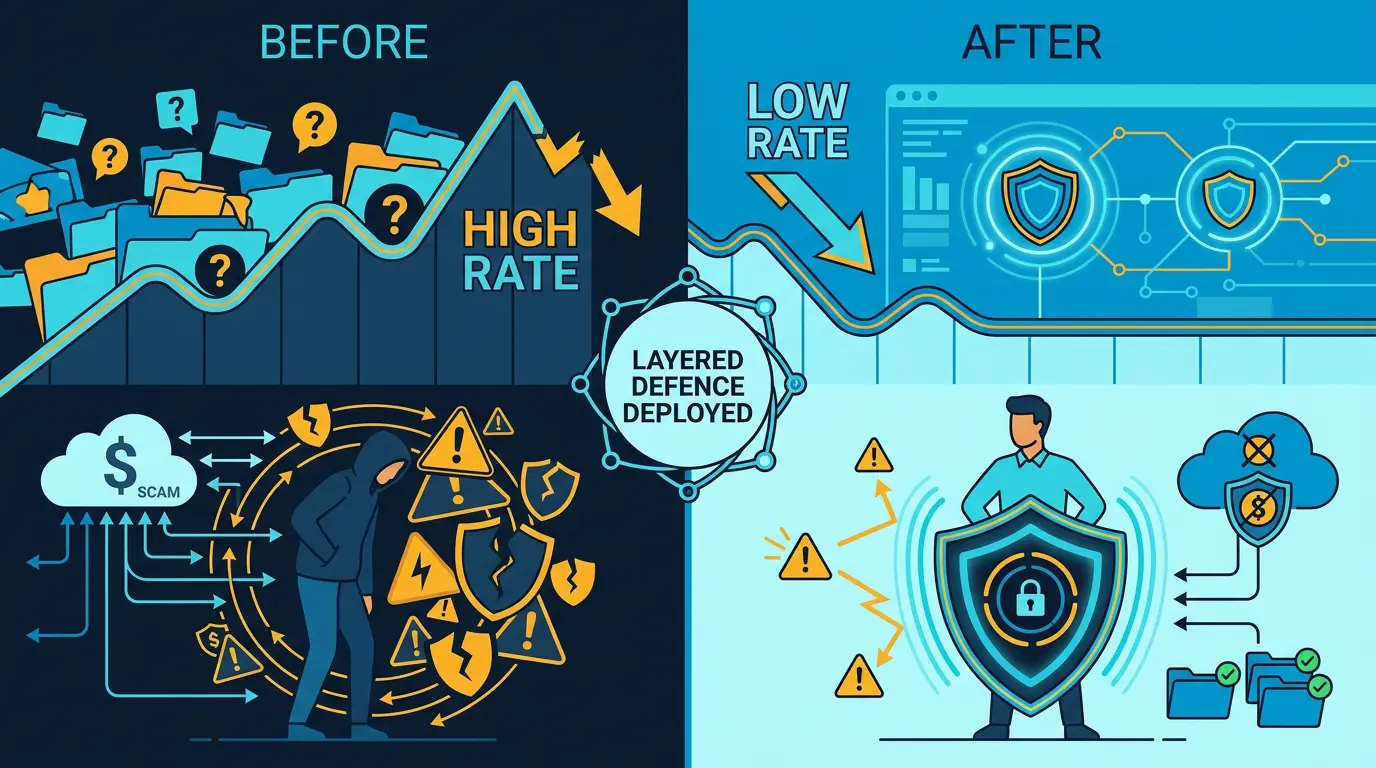
Measuring Prevention Effectiveness
Track metrics to evaluate and improve your scam prevention.
Key Metrics
| Metric | Target | Notes |
|---|---|---|
| Report rate per member | <0.5% | Too high suggests scammers not being caught early |
| False report rate | <20% | Too high suggests members misunderstanding scams |
| Average lifetime of scammer account | <7 days | Catch them before they message many users |
| Scammer messages before removal | <50 | Goal is to catch before significant victim contact |
| Victim reported loss recovery | 30%+ | Percentage of victims recovering funds with help |
Improvement Cycle
- Measure - Track which scams are caught early, which slip through
- Analyze - What patterns missed the detection?
- Improve - Adjust detection rules or warning systems
- Test - Verify improvement before deploying widely
Feedback Loop
- Member surveys: "Did you feel safe on our platform?"
- Victim feedback: "What signs should we have warned you about?"
- Law enforcement feedback: "What evidence was most helpful?"
- Industry collaboration: Learn from other platforms' experiences
Key Takeaways
- Romance scams are a major problem - average victim loses 10,000-15,000 GBP. Your responsibility is to detect and remove scammers quickly.
!Risk scoring algorithm visualization showing behavioral flags and thresholds for account suspension *Risk scoring algorithm visualization showing behavioral flags and thresholds for account suspension*
- Common scammer personas: military officer, wealthy businessman, single parent, Instagram attraction. Each has predictable patterns.
- Early warning signs include rapid emotional escalation, reluctance to video chat, inconsistent information, and explicit money requests.
- Automated detection using risk scoring and ML models catches most scammers before they message many users.
- Member education is crucial - teach users red flags and make reporting easy.
- Move to external chat quickly (within 24 hours) is a strong red flag. Encourage in-app messaging.
- Investigate all money-related reports within 48 hours. Confirmed scammers should be removed immediately.
- Preserve evidence and report serious cases to the National Crime Agency.
- Support victims with resources for recovery and validation that it's not their fault.
- Track metrics like scammer account lifetime and victim loss recovery to continuously improve prevention.
Cross-Links
- Online Safety Act: What Dating Site Owners Need to Know
- Content Moderation for Dating Sites: Tools and Strategies
- Fake Profiles and Bots: How to Detect and Remove Them
DatingPartners romance scam defence has 80% block rates. Member safety by default.
Visit DatingPartners.com →