
The paywall is where a dating site's engagement turns into revenue, or fails to. This guide explains how to design one that converts, mostly by getting the timing right.
What a paywall is in dating
A paywall is the point in a dating site's experience where the member is asked to pay in order to continue, or to do something they want to do.
In a dating context the paywall is the boundary between what a member can do without paying and what requires payment. On a freemium site, the paywall is the boundary around the premium features: a member can use the free core, and the paywall is what they meet when they reach for a premium capability. On a paid or hard-paywall site, the paywall sits around the core of the service itself: a member can join and see the site, and the paywall is what they meet when they try to do the things they actually came for.
The paywall is not just a wall; it is a moment and a message. It is the moment the site asks for money, and the message that explains what the member gets for it. Both the moment and the message are design decisions, and getting them right is what this guide is about.
It is worth distinguishing the paywall from the pricing model. The pricing model, covered in the pricing guidance, is the strategic choice of freemium, paid or hybrid. The paywall is the experience design of where, when and how the payment request actually appears to the member. An operator chooses the model first; paywall design is how that model is expressed in the member's actual experience.
For an operator, the starting point is to see the paywall as a designed moment, not just a gate: the point where engagement is asked to become revenue, and a point whose timing, placement and message determine whether it converts.
Why paywall design matters
Paywall design matters because the paywall is the precise point where a dating site's monetisation succeeds or fails, and small differences in its design produce large differences in revenue.
As the analytics guidance establishes, the free-to-paying conversion rate is one of the two or three most important numbers in a dating app. The paywall is where that conversion happens. Every member who becomes a paying subscriber does so by encountering a paywall and deciding to pay. So the paywall is not a minor interface detail; it is the mechanism of conversion itself.
A well-designed paywall and a badly-designed one can present exactly the same service, at exactly the same price, to exactly the same members, and convert at very different rates. The difference is not the service or the price; it is whether the paywall appears at a moment when the member feels the value, with a message that connects the payment to what they want. Get the moment and the message right and a member converts; get them wrong and the same member, who would have paid, does not.
This means paywall design is high-leverage. Improving the paywall improves the conversion rate, and the conversion rate, applied across all the engaged members the site has, is a large lever on revenue. And, like landing-page design, improving the paywall is mostly a matter of design and testing rather than spend.
Paywall design also matters for the member experience and for trust. A paywall that is well-timed and honest feels like a fair offer at a sensible moment. A paywall that is badly-timed, aggressive, or deceptive feels like an ambush, and it damages how the member feels about the whole site, which affects retention and word of mouth.
For an operator, the lesson is that the paywall deserves real design attention. It is the conversion mechanism itself, it is high-leverage, and it shapes both revenue and trust.
Placement: where to put the paywall
The first design question is placement: where, in the member's experience, the paywall sits, and the guiding principle is that the paywall should gate the things members most value.
Every dating site has to decide what is free and what is paid. The pricing model sets the broad shape, but within it there are choices about exactly which capabilities sit behind the paywall. Those choices are paywall placement, and they should be made deliberately.
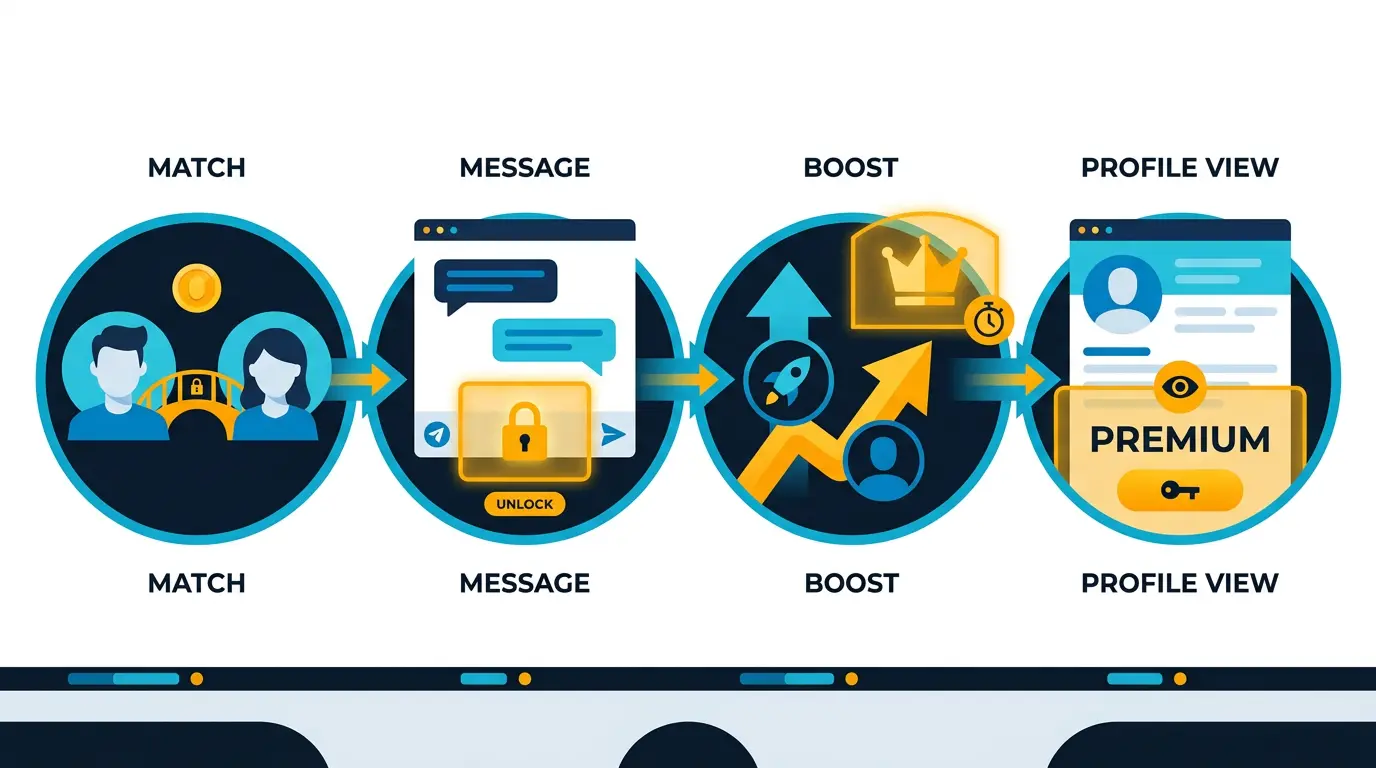
The principle is that the paywall should sit around the capabilities members genuinely want most, because those are the capabilities members will pay for. In dating, the capability members most consistently value is the ability to genuinely connect, in most cases, to message and have real conversations with the people they are interested in. A member who has found someone they want to talk to has, at that moment, a strong reason to pay. Gating that core connection is, for many dating sites, the most natural and most effective paywall placement, and it is why so many dating sites make messaging the paid action.
What members should be able to do freely is enough to reach that point of wanting to pay: enough to see that the site is real and genuinely populated, to build a profile, to browse, to find people they are interested in. The free experience should carry the member to the threshold of real value; the paywall should sit at that threshold.
Placement that is too greedy, gating so much that the member cannot even tell whether the site is worth paying for, fails, because the member never reaches the point of wanting to pay. Placement that is too generous, leaving the genuinely core value free, also fails, because the member gets what they wanted without ever needing to pay.
For an operator, the guidance is to place the paywall around the capabilities members most value, typically real connection and messaging, while keeping free enough of the experience that members can reach the point of genuinely wanting those capabilities.
The trigger moment
Closely related to placement is the trigger moment: the specific instant at which the paywall appears to a member, and this is the single most important thing in paywall design.
The trigger moment is when the member actually encounters the payment request. And the central insight of good paywall design is that the same paywall, triggered at different moments, converts very differently, because the member's felt desire to pay is not constant. It rises and falls with what the member is doing.
The right trigger moment is the moment the member most feels the value of paying. In dating, that moment is usually a moment of intent: the member has just found someone they are genuinely interested in, and wants to message them. At that instant, the member's desire to do the paid action is at its peak. They are not being asked to pay in the abstract; they are being asked to pay to do the specific thing they want to do right now. A paywall triggered at that moment converts well, because it meets the member at the height of their motivation.
The wrong trigger moments are the ones where the member's felt desire is low. A paywall triggered arbitrarily, on arrival, before the member has found anyone they care about, or at a random point unconnected to any action, asks the member to pay in the abstract, with no specific value in view. The same member who would convert readily at the moment of intent may decline flatly when asked at a moment of no particular desire.
So good paywall design ties the trigger to intent. The paywall appears when the member reaches for something they want, and it offers them exactly that. This is why gating messaging works so well: the trigger moment, the member wanting to message a specific person they like, is a natural high-intent moment.
For an operator, the guidance is to make the trigger moment a moment of genuine member intent, the member reaching for real value, rather than an arbitrary point. The trigger moment is where paywall conversion is mostly won or lost.
Paywall copy
When the paywall appears, it carries a message, and the copy of that message, what the paywall actually says, is the second half of good paywall design.
The job of paywall copy is to connect the payment to the value the member wants in that moment. The member has just reached for something, to message a match, to use a feature, and the paywall's copy should speak to exactly that. It should make clear what the member gets, framed in terms of the thing they were just trying to do, and what it costs.
Good paywall copy is specific and value-focused. It connects to the trigger moment: if the member was trying to message someone they like, the copy should be about being able to message and connect, the thing they want, not about an abstract list of premium features. The copy should make the member feel that paying gets them precisely the thing they reached for.
Good paywall copy is also clear and honest about the price and terms, which the honesty section returns to. The member should understand what they are paying, and the recurring nature of it, plainly.
Good paywall copy is concise. The paywall appears at a moment of intent; the member wants to get on with the thing they were doing. Copy that is long, dense, or full of marketing language gets in the way. Clear, brief copy that says what the member gets, what it costs, and lets them proceed works better than an elaborate sales pitch.
What paywall copy should not do is manipulate. Copy that manufactures false urgency, that pressures, that shames the member for not paying, or that obscures the real terms, may squeeze a few extra conversions but damages trust and connects to the honesty problems below. The paywall should make an honest, appealing offer at a good moment, not apply pressure.
For an operator, the guidance is to write paywall copy that connects the payment directly to the value the member wants in that moment, states the price and terms clearly and honestly, and stays concise. The copy's job is to make a clear, honest, well-aimed offer, not to pressure.
Hard and soft paywalls
A structural choice in paywall design is whether the paywall is hard or soft, and an operator should understand the difference and the trade-off.
A hard paywall fully blocks the gated capability. The member cannot do the paid action at all without paying. On a hard-paywall paid site, a member genuinely cannot message anyone until they subscribe. The paywall is an absolute boundary.
A soft paywall limits rather than blocks. The member can do some of the gated thing, but not freely or fully. They might be able to send a limited number of messages, or use a feature a limited number of times, with the paywall appearing when they reach the limit. The paywall constrains rather than forbidding outright.
The trade-off is between conversion pressure and member experience. A hard paywall applies maximum pressure to convert, because the member cannot get the value any other way, and it tends to produce the committed, serious members the paid model is known for, as the pricing guidance describes. But it gives the member less chance to experience the value before deciding, which is why hard-paywall sites often pair the paywall with a free trial to let value be experienced. A soft paywall lets the member taste the gated value, which can build their desire to pay, but it also lets some members get enough for free that they never convert.
Which is right depends on the model and the niche, the same factors the pricing guidance describes. A serious, relationship-focused site often suits a harder paywall, sometimes with a trial; a broader site may do better with a softer one. The choice should be deliberate and matched to the audience.
For an operator, the guidance is to choose hard or soft paywall deliberately, understanding that a hard paywall maximises conversion pressure and member seriousness while a soft one lets members taste value, and to match the choice to the model and niche rather than copying a familiar app.
The paywall and the member experience
A paywall is a monetisation device, but it is also a moment in the member's experience of the site, and a good operator designs it as both.
The risk is treating the paywall purely as a revenue mechanism and ignoring how it feels. A paywall that is badly timed, aggressive, repetitive, or deceptive does convert some members, but it also leaves every member who encounters it, including the ones who do not convert, with a worse feeling about the site. And members who do not convert today are members the site wants to convert later, or to retain as part of the active community that makes the site worth paying for.
A well-designed paywall, by contrast, can feel like a fair part of the experience. It appears at a sensible moment, when the member wants real value. It makes a clear, honest offer. It does not nag, does not pressure, does not deceive. A member who meets a paywall like that, even if they decline today, comes away thinking the site made them a reasonable offer, not that the site tried to trap or harass them.
This connects to the broader point that runs through the monetisation guidance and the analytics guidance: a dating site's revenue model compounds through members who stay and through a healthy, active community. Monetisation that damages the experience undermines the very thing that makes the site valuable. The paywall should take revenue without poisoning the experience.
There is also the matter of frequency. A paywall the member meets once, at a sensible high-intent moment, is reasonable. A paywall that interrupts the member constantly, that appears aggressively and repeatedly regardless of context, becomes harassment, degrades the experience badly, and can drive members away entirely.
For an operator, the guidance is to design the paywall as part of the member experience, not just as a revenue device: well-timed, honest, non-nagging, so that even members who decline come away feeling the site treated them fairly.
Honesty at the paywall
The paywall is a point where money changes hands, and honesty at the paywall is both a compliance requirement and a foundation of the trust the whole site depends on.
Honesty at the paywall means the member understands exactly what they are agreeing to. The price must be clear. If the payment is a recurring subscription, and on a dating site it usually is, the recurring nature must be clear, not hidden or glossed. If there is an introductory offer or a trial, what happens when it ends must be clear, as the free-trial and advertising-compliance guidance both stress. The member should leave the paywall knowing what they will be charged, when, and on what recurring basis.
Honesty at the paywall also means the offer is real. The paywall must not promise outcomes the service cannot deliver, must not imply guaranteed romance or guaranteed results, must not overstate what paying gets the member. The value the paywall offers must be value the service genuinely provides.
And honesty at the paywall means no manipulation: no fake urgency, no fake scarcity, no deceptive design that tricks the member into a purchase or obscures the terms. The subscription-trap concerns the free-trial guidance describes apply at the paywall too.
This is not only an ethical and trust point; it is a compliance point. The advertising-compliance and free-trial guidance both describe the tightening consumer-protection rules around subscription transparency, and the paywall is exactly where those rules apply, because it is where the member commits to the recurring charge.
There is, again, a business case for honesty beyond compliance. A member who paid at an honest paywall, fully understanding the recurring charge, does not later feel deceived, does not in surprise, and does not spread the word that the site tricked them. An honest paywall produces genuine, durable paying members; a deceptive one produces chargebacks and reputational harm.
For an operator, the guidance is unambiguous: the paywall must be honest, clear price, clear recurring terms, real offer, no manipulation, because it is the point of payment, the focus of subscription-transparency law, and a foundation of member trust.
Testing the paywall
Like the landing page and the pricing, the paywall is not designed perfectly on the first attempt, and an operator should test and refine it.
No operator knows in advance the exact best placement, trigger moment, copy and structure for their particular niche. Intuition and the principles in this guide give a strong starting point. Testing turns the starting point into something better.
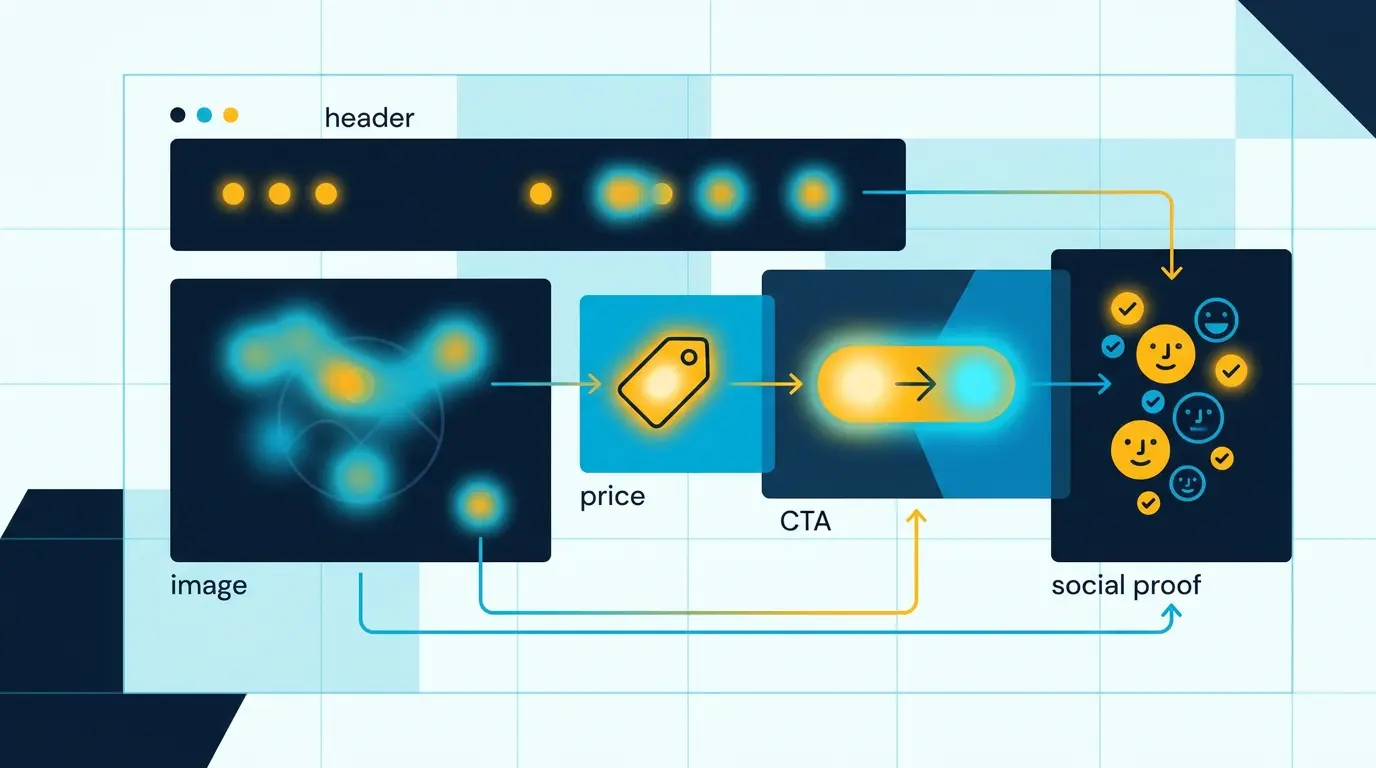
Testing the paywall means trying variations and measuring which converts better, while watching the genuine downstream effect, not just the immediate conversion. An operator can test paywall copy, the exact trigger moment, the structure, hard versus soft, the framing of the offer. The measure is the conversion rate, but, as with the free trial, it must be read alongside what happens to the members it converts: do they stay, do they chargeback, what is their lifetime value. A paywall variation that converts more members but produces members who churn or dispute is not an improvement.
The discipline, as throughout the analytics and monetisation guidance, is to test one meaningful thing at a time, so that when conversion moves the operator knows what moved it, and to refine on real evidence over a sensible period rather than reacting to noise.
The paywall should also be revisited as the site develops. A paywall that converts well today can usually be improved, and the niche, the audience and the competitive context evolve.
For an operator, the guidance is to treat the paywall as a living design to be tested and refined, one change at a time, measured by genuine conversion and downstream member quality, not as a thing built once and fixed.
Common mistakes
The defining mistake is triggering the paywall at the wrong moment, arbitrarily or before the member feels any value, instead of at a moment of genuine intent when the member is reaching for something they want.
The second is greedy placement, gating so much that the member cannot even tell whether the site is worth paying for, so they never reach the point of wanting to pay.
The third is paywall copy that talks in abstract feature lists or applies pressure, instead of connecting the payment clearly to the value the member wants in that moment.
The fourth is treating the paywall purely as a revenue device, making it aggressive, repetitive or nagging, which damages the experience for every member who meets it, including future converters. The fifth is dishonesty at the paywall, unclear price, hidden recurring terms, manipulation, which breaches tightening subscription law and produces chargebacks and lost trust. Time it to intent, connect the copy to value, keep it humane, keep it honest.
What to read next
For the model behind the paywall, read how to price a new dating site. For the trial that often pairs with it, see dating free trial offers. For converting members overall, read dating payer conversion optimisation. For the honesty rules, see dating advertising compliance. And to see a platform's monetisation tools, DatingPartners.com can walk through them.
DatingPartners paywall library is tuned across dozens of tested layouts. Copy winners.
Visit DatingPartners.com →